Few cars hold the mystique, the panache of the Mercedes-Benz SL. Beginning life in 1952 as the W194, it was a true racecar, a spacey-looking coupe with Gull Wing doors that took home a number of victories including the 24 Hours of Le Mans, the Carrera Panamericana, and Bern-Bremgarten to name a few. Mercedes-Benz saw the public interest and introduced the roadgoing version in 1954 as the 300SL. Like the original racecar, the 300SL was a two-seater coupe with Gull Wing doors that offered some creature comforts, but was indeed a sportscar meant for performance driving. It was also highly exclusive, costing upwards of around $7,000, about $84,000 today. Ceasing production by the end of 1956, Mercedes-Benz would create the 300SL Roadster for 1957, a much more comfortable car costing nearly $11,000 new. This would arguably be the car that established the formula for how two-seater roadsters should be built.
The interior would be comparable to the Gull Wing, with two seats and a small stowage area behind them, providing space for whatever the wealthiest set of the late 1950s might be lugging around, like purses or briefcases, or packages from Tiffany’s or Nieman Marcus or maybe even Bonwitt Teller. While many sportscar enthusiasts today lament the idea of a small package seat behind the two front seats, wanting the wheelbase to be as short as possible, the fact remains, that little area provides a perfect space for ‘stuff’ while people shuttle around town.
Broadening its marketability, alongside the big SL, Mercedes-Benz introduced the 190SL, a kind of baby SL that bore a resemblance to the 300SL but did so on a much more economical scale – instead of a big 6-cylinder, it had a 1.9L 4-cylinder engine and was built primarily with pedestrian sedan equipment. This kept the costs down considerably and allowed the car to outsell the 300SL by about 7-to-1. Like the 300SL, the 190SL also hosted the little package area behind the seats, a sizeable trunk, outstanding build quality, comfortable seats, and the option of a removable hardtop. It was a lovely car, but for 1963, Mercedes-Benz would introduce an all-new, ultra-modern SL known as the W113.
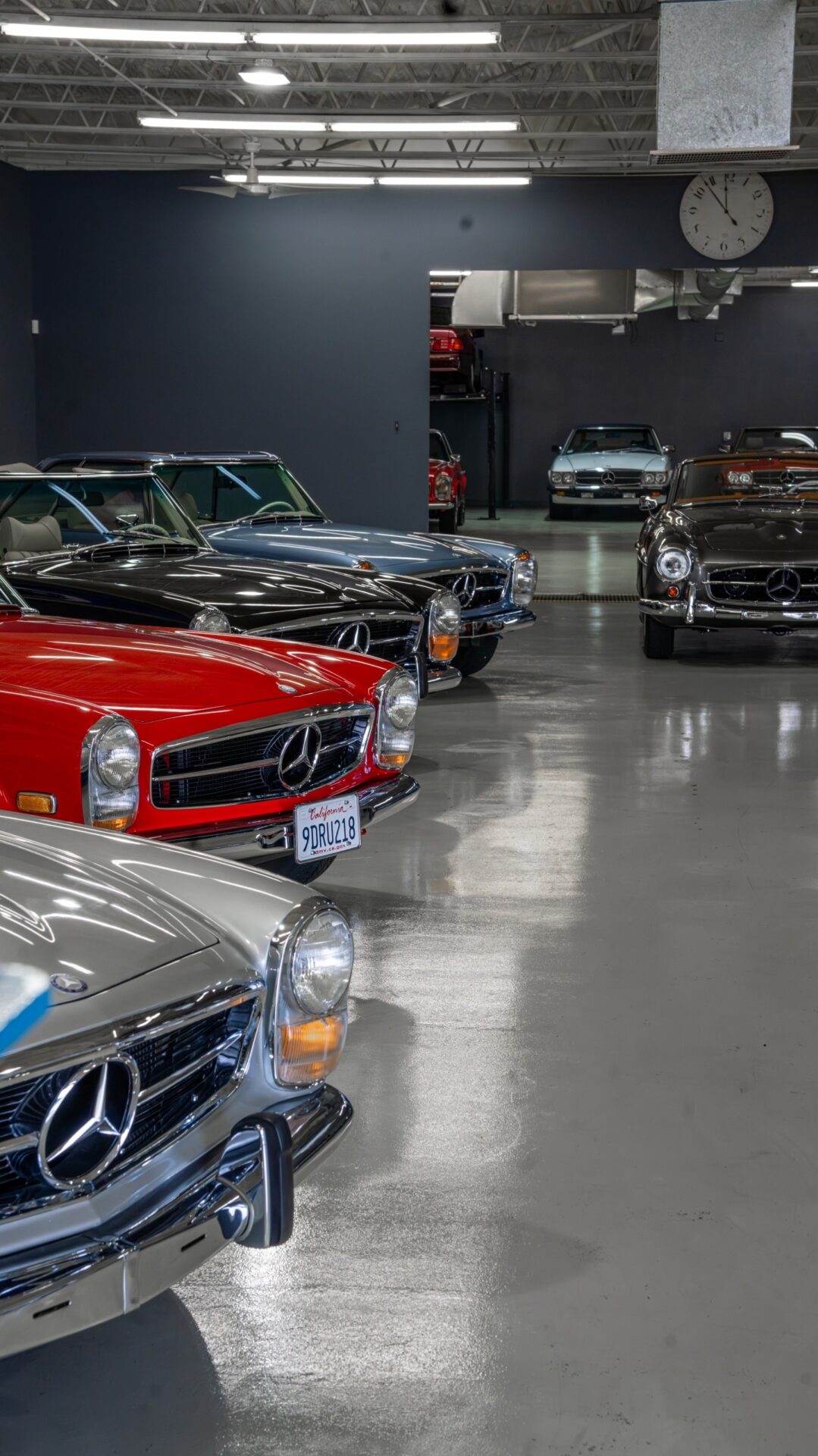
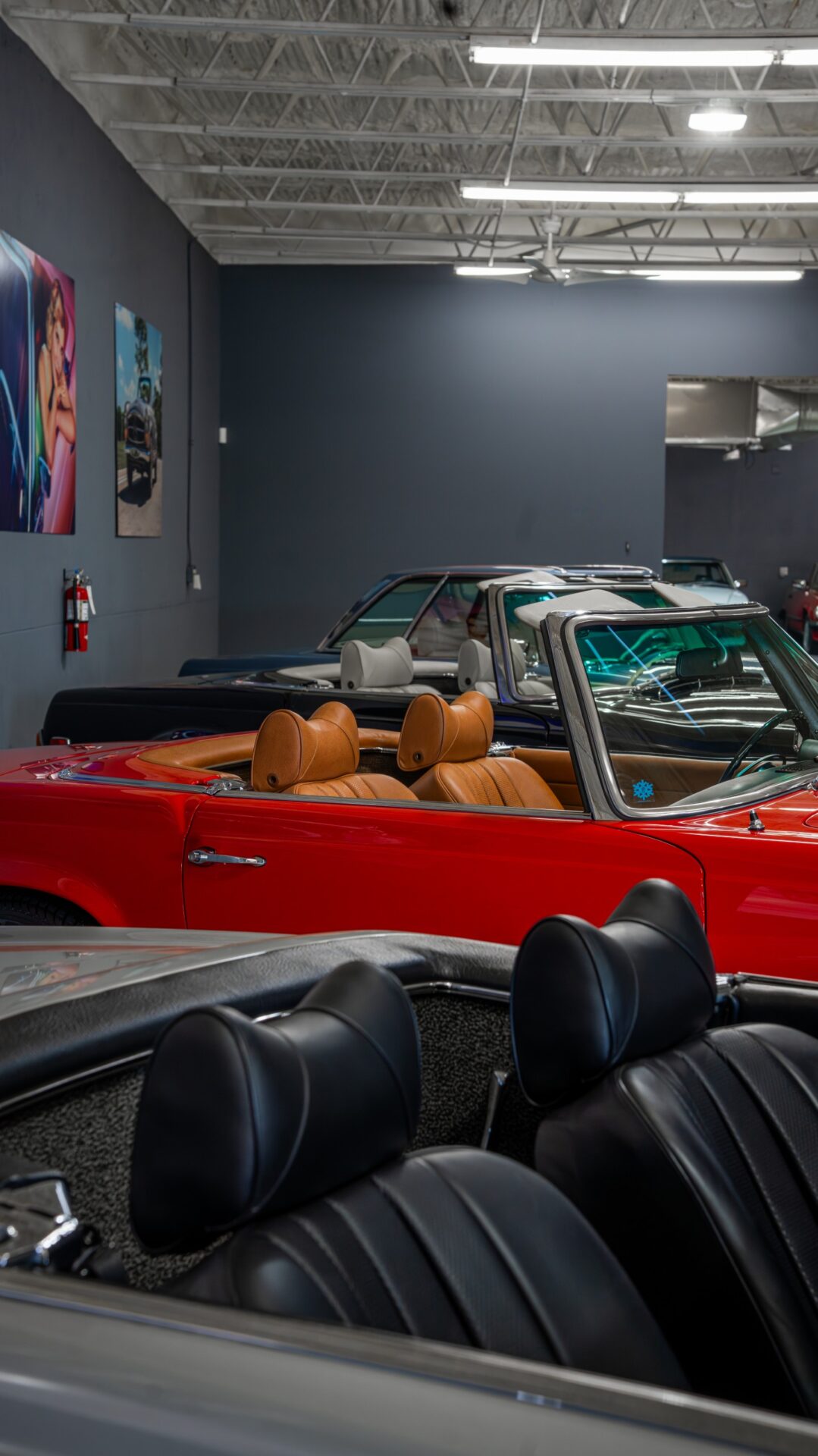
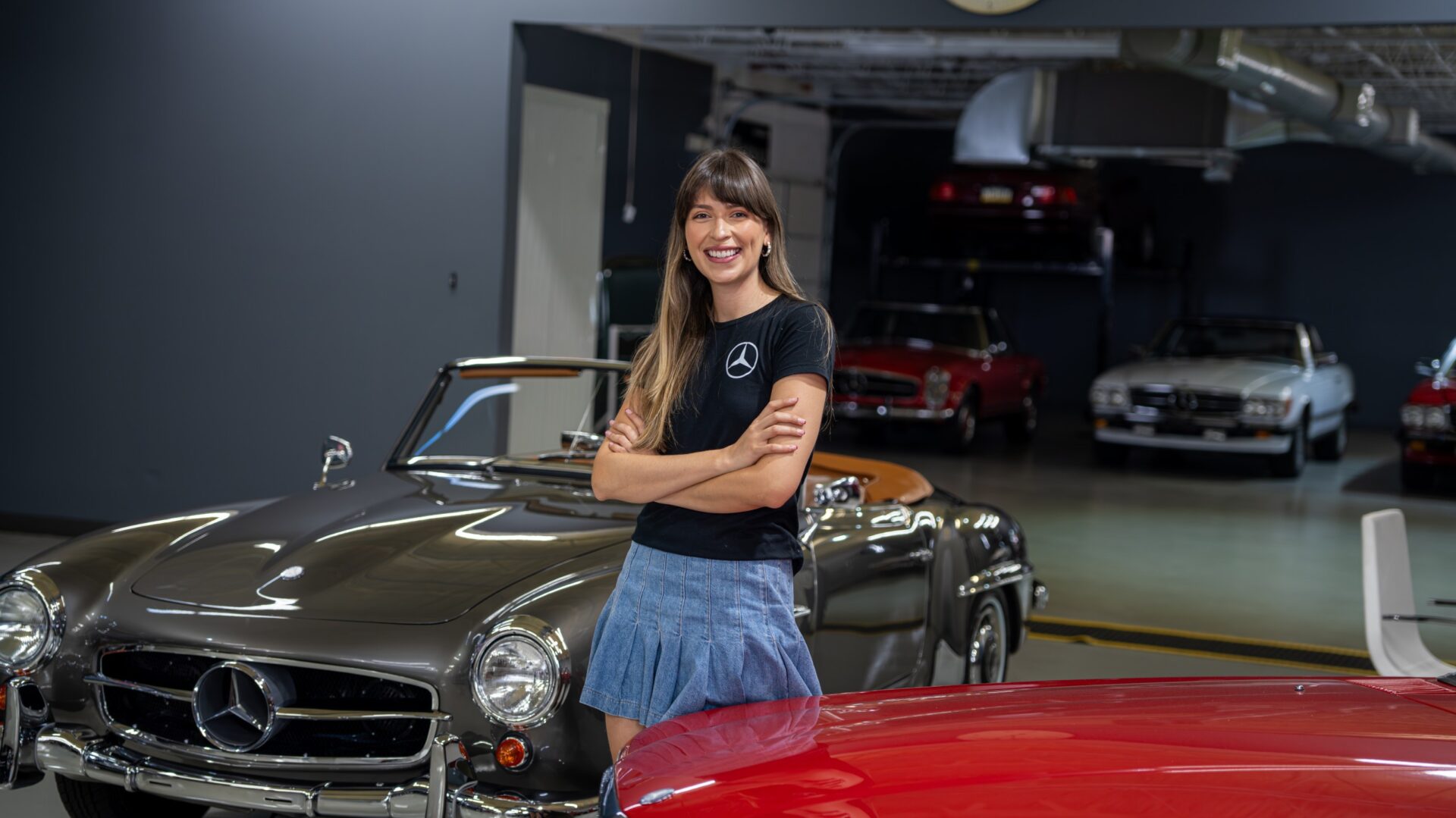
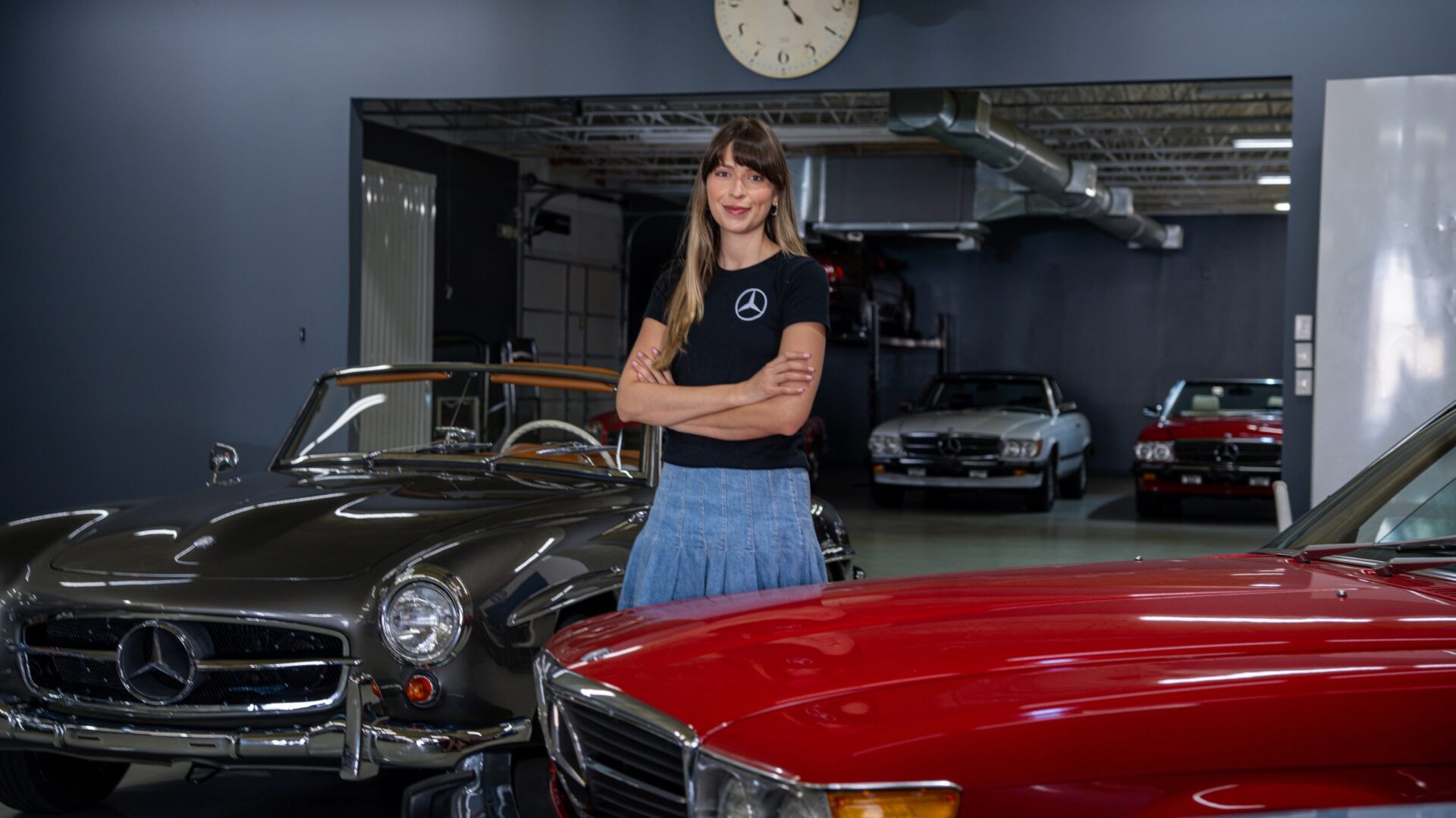
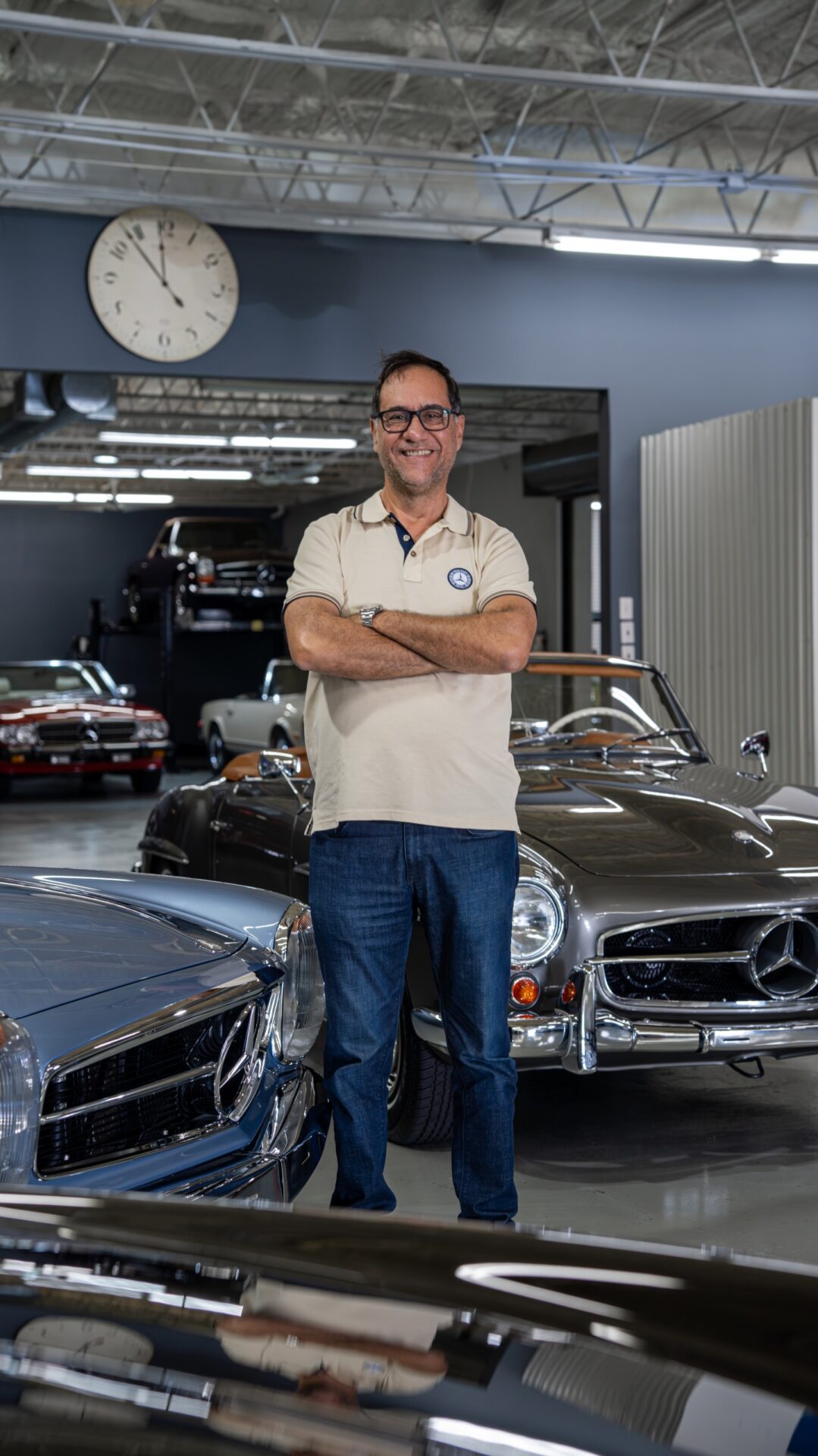
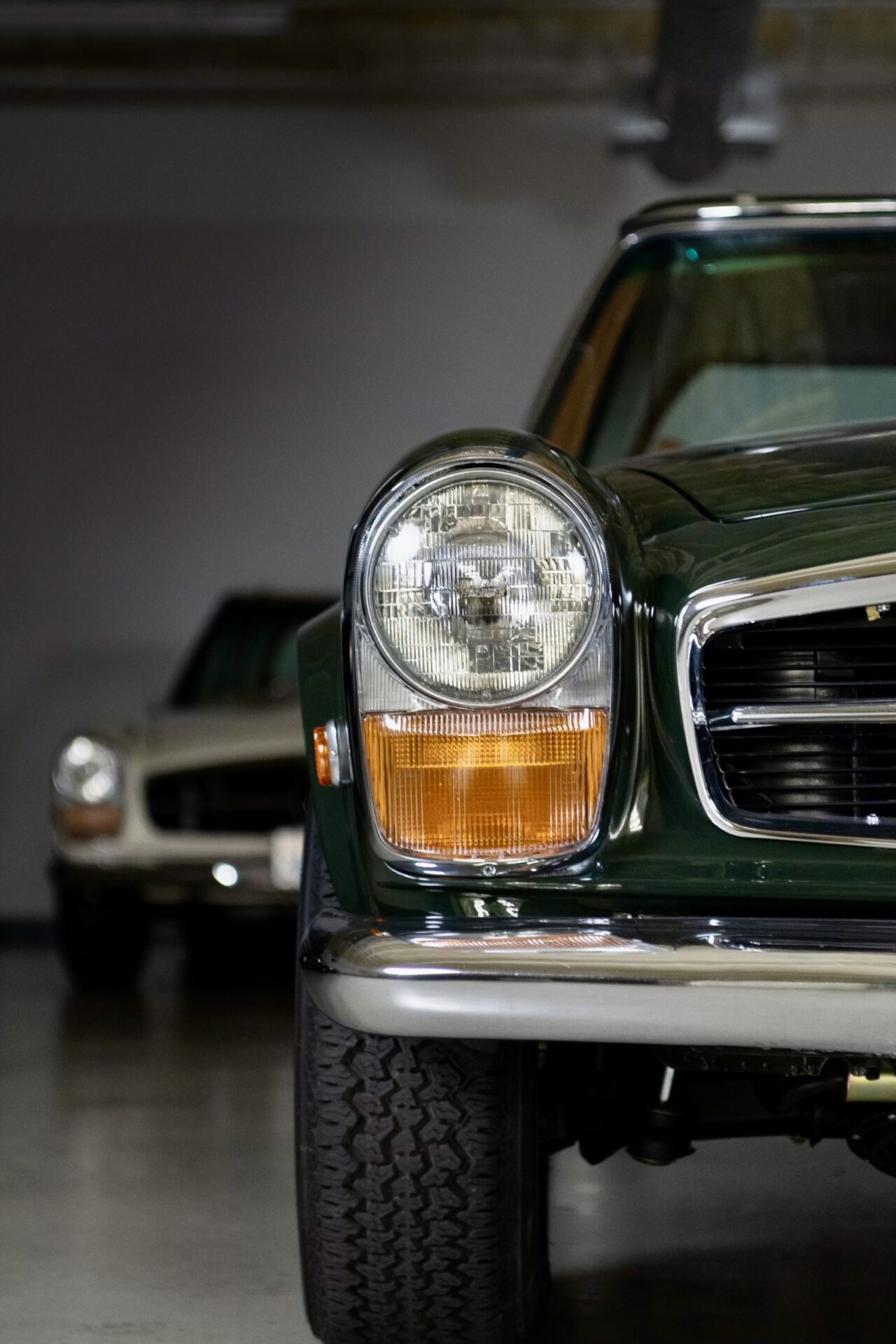
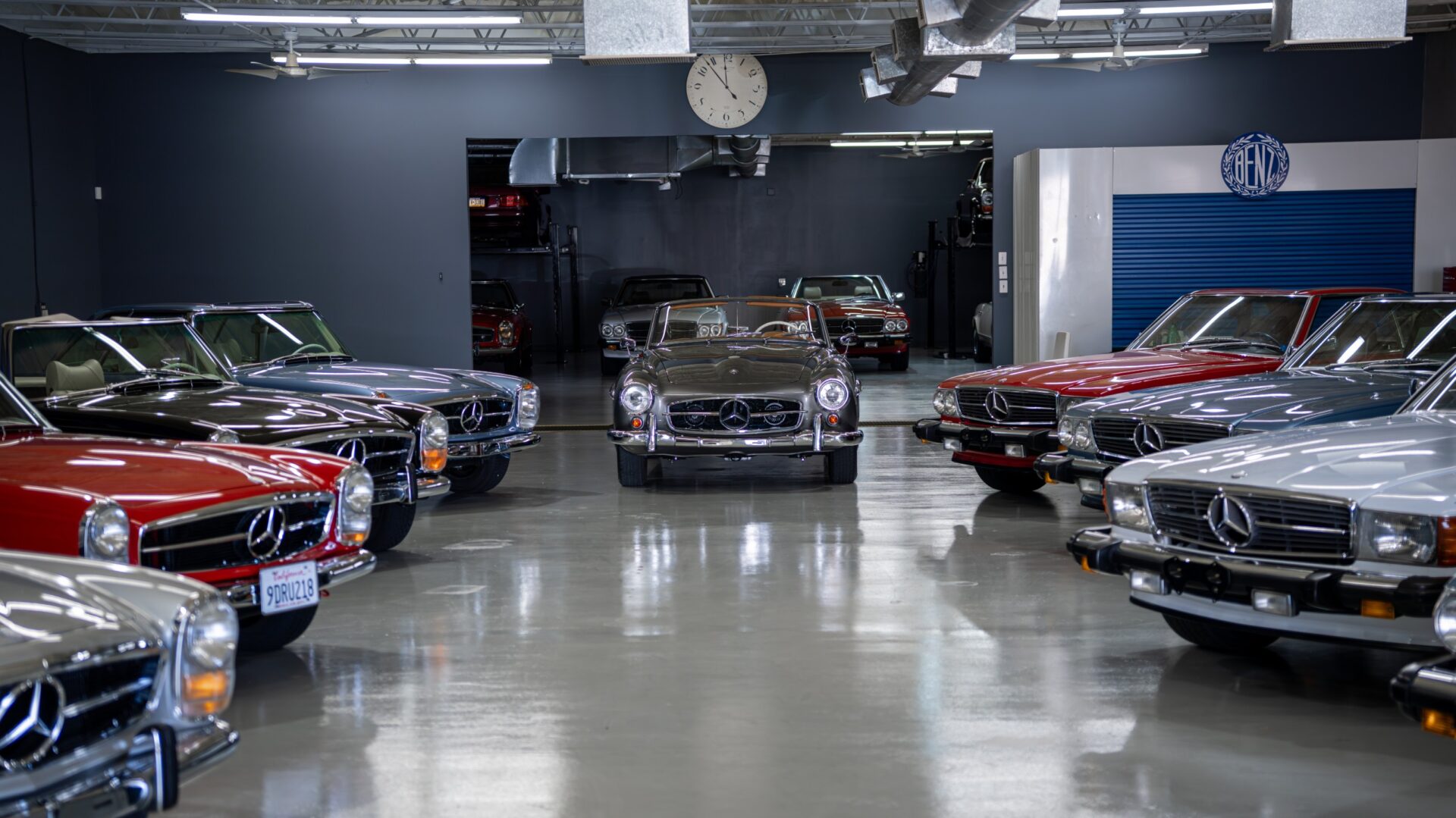
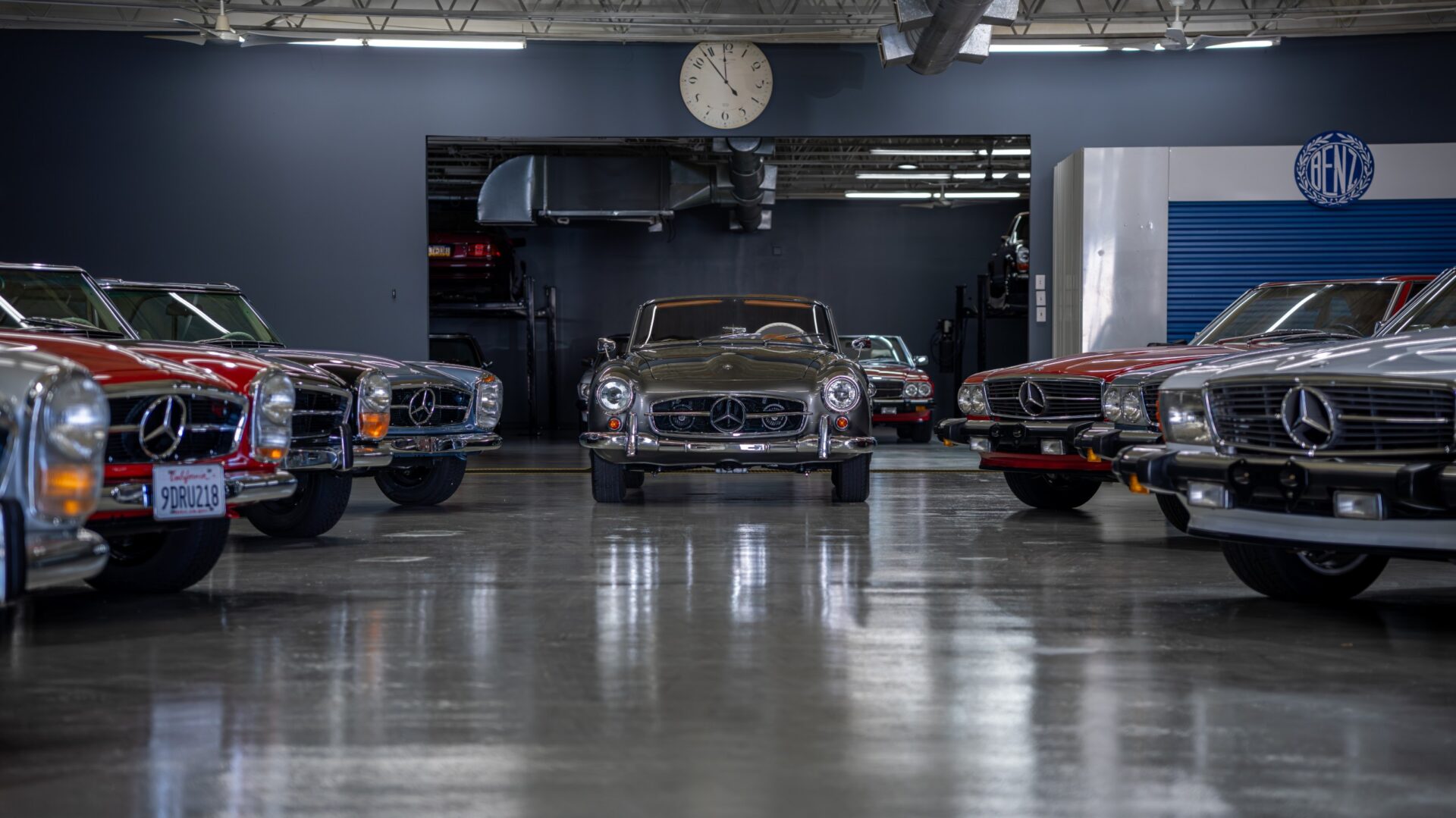
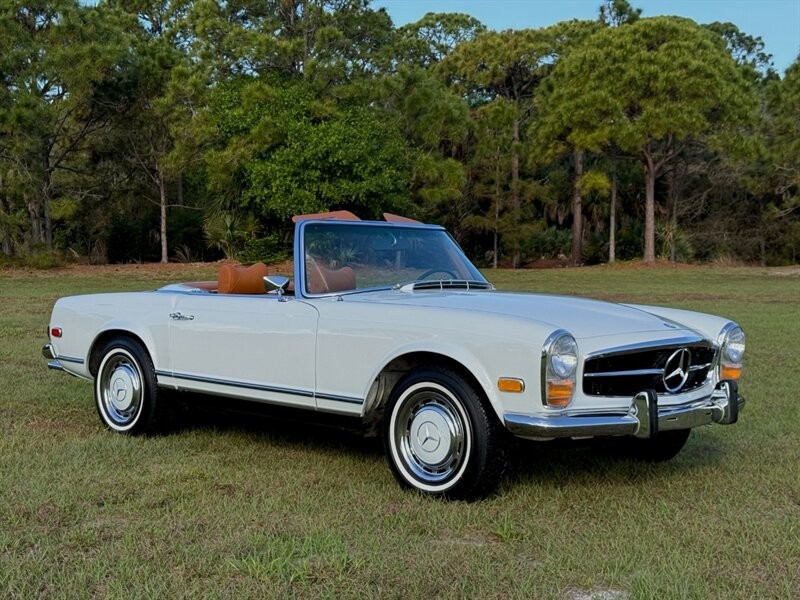
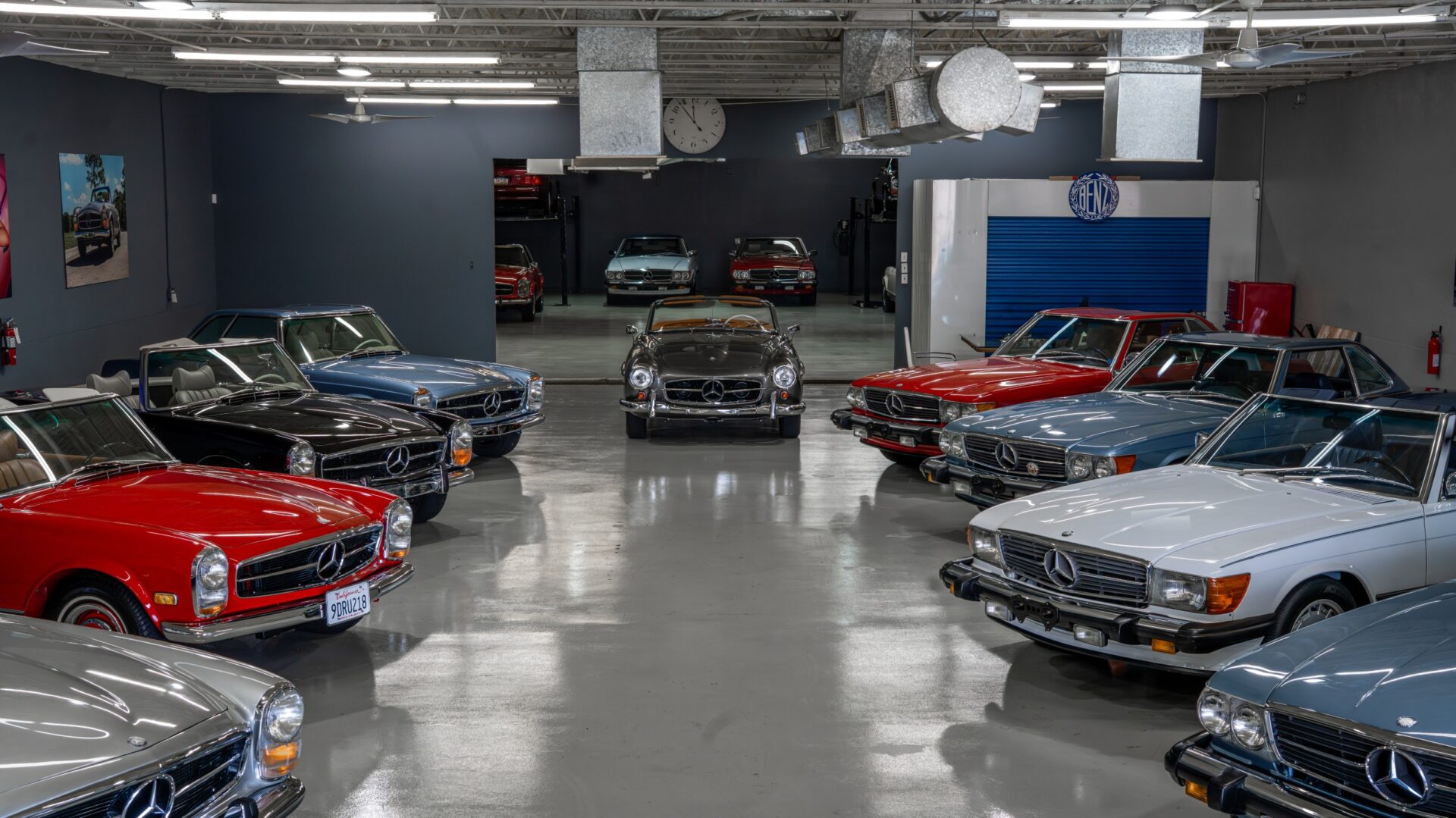
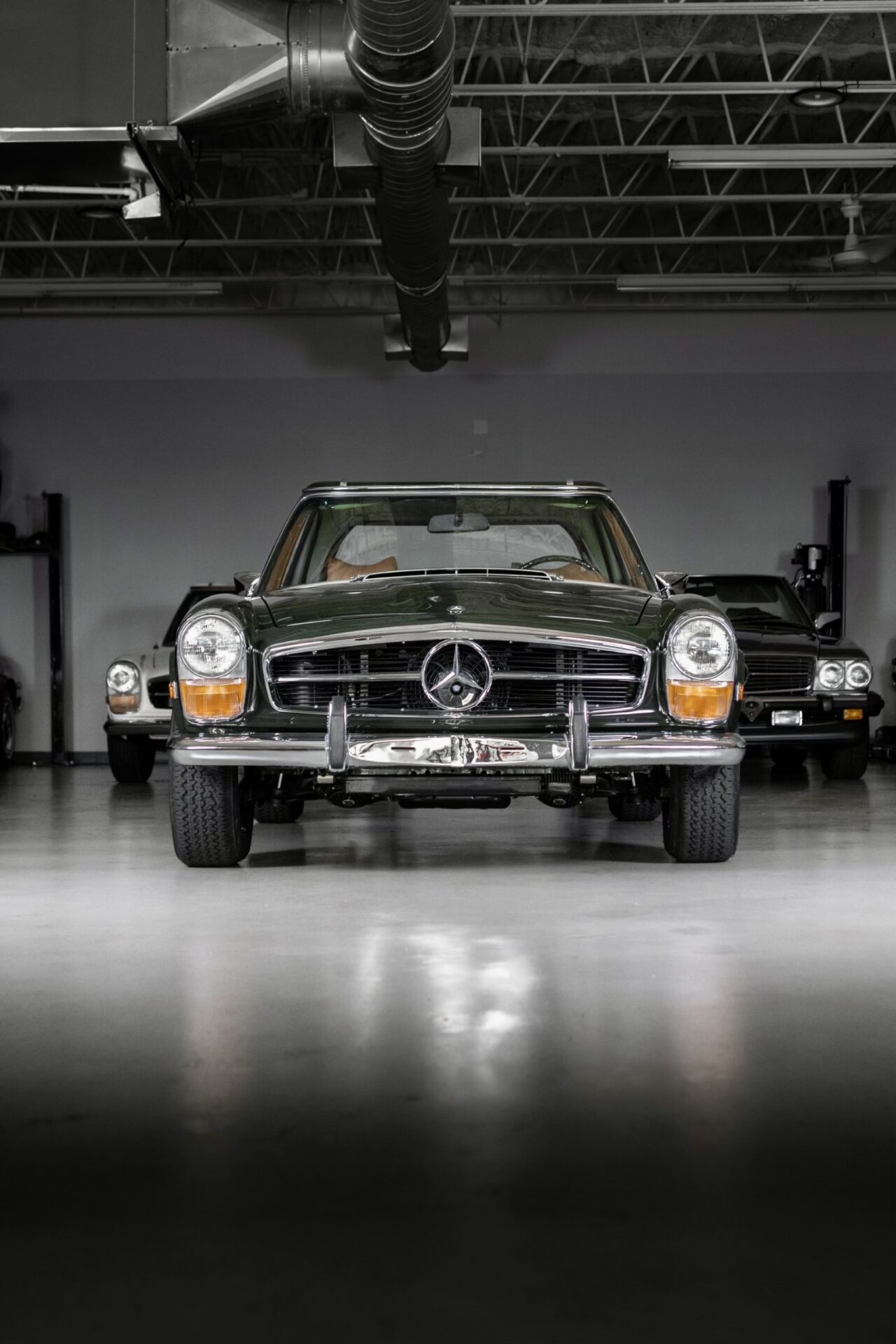
The W113 SL would span production through the 1971 model year as the 230SL, the 250SL, and the 280SL and offer a similar formula to the 190SL and 300SL – two seats, little package area, nice trunk, excellent build quality, and so on. But, where the W113 sparkled was its 6-cylinder engine. Just like the 300SL, the new SL was powered by an inline 6-cylinder that would evolve over the years from 2.3L to 2.5L to 2.8L with transmissions and fuel delivery systems evolving along with the engine. An absolute joy to drive, the W113 was also very modernly styled and boasted a body that was shockingly stiff. It was an immediate hit that quickly established itself as a must-have dream car among motoring enthusiasts. One such gentleman was Freddy Genatios, who developed a very deep interest in the W113 early on.
“My background is in civil engineering and business,” said Freddy. “I’ve always been a car enthusiast, for my whole life, I love cars, and most of my business ventures revolved around cars. Having a particular interest in the Mercedes-Benz SL, especially the W113, I wanted to focus on those cars, as well as the successor, the R107 of 1971 to 1989. I like these two generations especially, and they are very popular.”
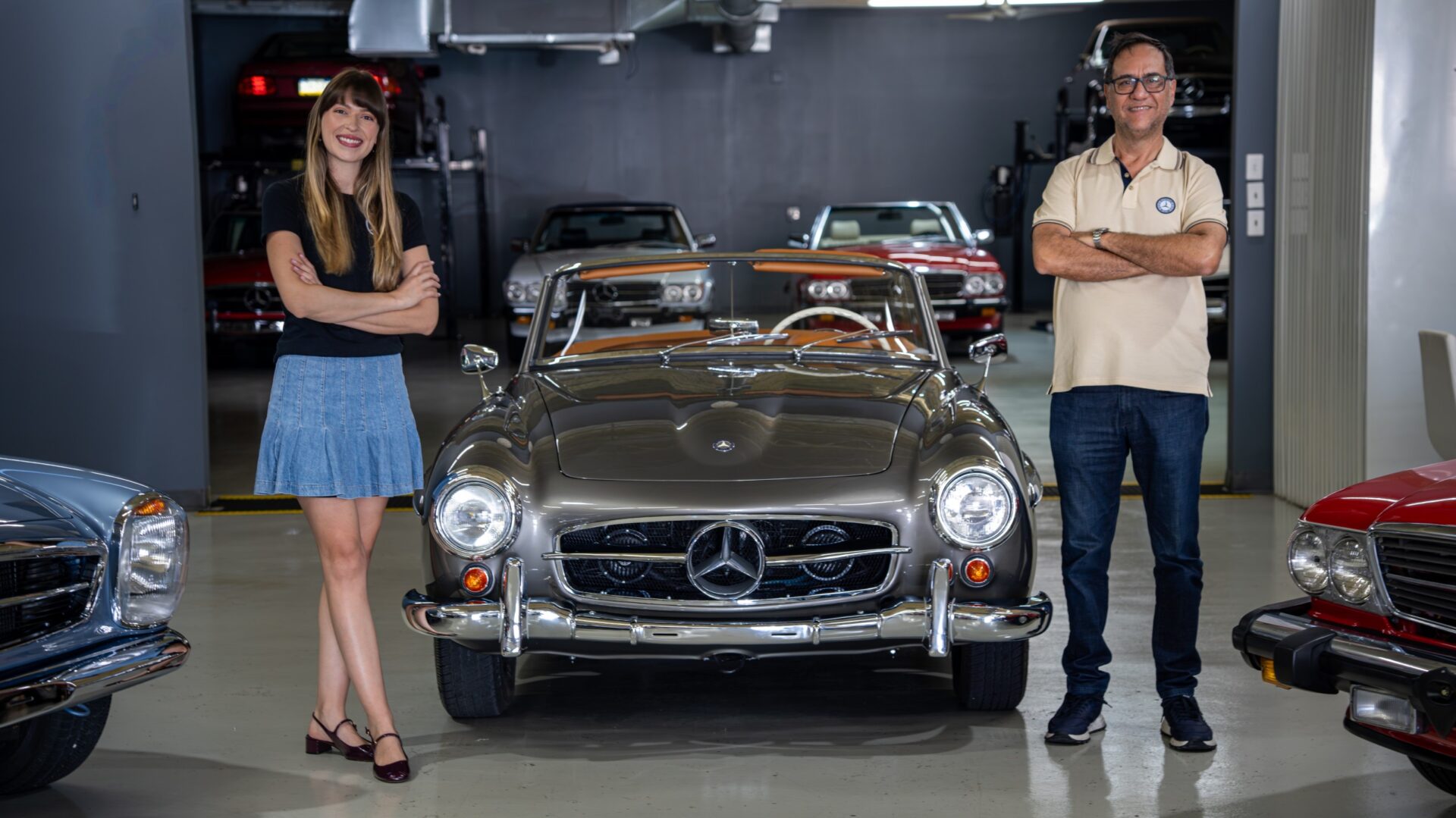
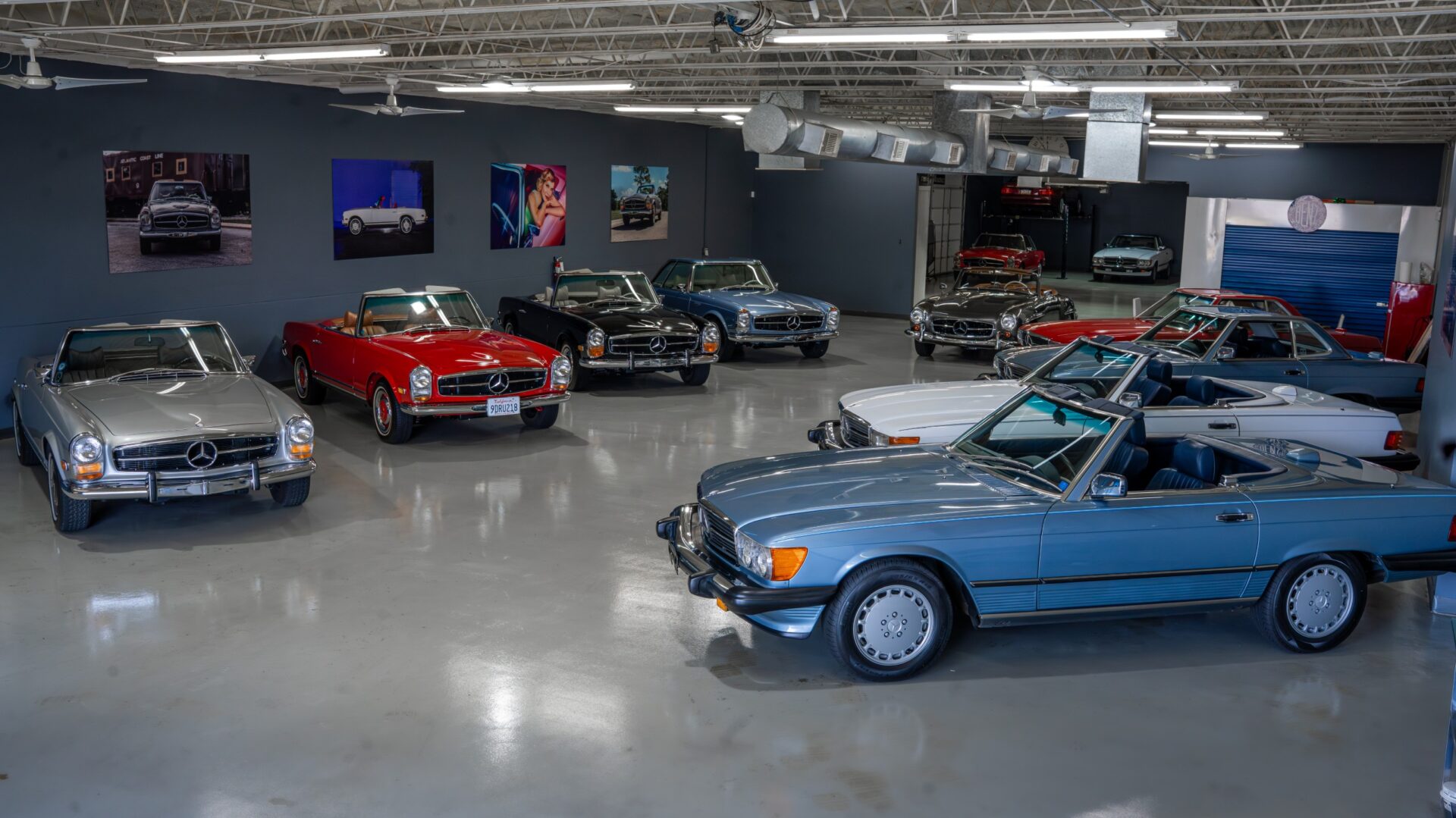
With this, Freddy and his wife, Erika, launched Unique Cars of Palm Beach in Boca Raton, Florida. Providing sales, consignment, service, and full restoration, Unique Cars of Palm Beach strives to be a one-stop-shop for all things W113 SL with a healthy and growing reputation in R107 circles, in particular the last of the R107, the 560SL. In fact, if you’re a fan of “Reels” on Facebook, you’ve likely seen their tantalizing videos of beautiful people cruising in beautiful SLs in beautiful locations around their home digs. A total family affair, Freddy’s wife and daughter, Oriana, put the videos together and run their entire digital campaign.
“Working with each other is fun, we have a good time, and we’ve brought together a small but extremely capable staff to help maintain and restore these cars,” he said. “Both SLs, the R107 and the W113, are very popular. In fact, I might even suggest they are the most popular, the most iconic of the many SLs that have been built.”
Which is good, because cruising their website, especially the “Inventory” section, shows a number of R107s looking for new homes.
“We don’t restore the R107s yet, but we will get there, I’m sure,” he said. “We do a lot of servicing for them, but we built the business on the W113, that’s our heart and soul, and it shows in our restorations. Anyone who knows these cars knows, when you restore a W113 SL, there are a number of unique details to pay attention to, things that enthusiasts really appreciate seeing. We definitely adhere to those details. But, we are not afraid to modernize an SL to enhance the enjoyment of it.”
With that in mind, it’s interesting to find out that a W113 can be enhanced with modern air conditioning, a modern stereo system with integrated Bluetooth, updated transmissions, higher rear-end gearing, and much more. While it might seem sacrilege, Erika points out that these improvements only help people enjoy the car more.
“Here in Florida, it gets very hot,” she said. “So, it’s important to have an excellent air conditioning system and an excellent convertible top to insulate the interior. Likewise, all of the weatherstripping and insulation must be updated and it’s a good idea to install a higher-capacity cooling system for the engine. But this doesn’t have to be just for people here in Florida, anyone can benefit from the upgrades. It’s all about comfort and enjoyment. If you’re comfortable, you’re enjoying the car, if you’re enjoying the car, you are happy with it and more likely to use it more, and these cars love to be driven often.”
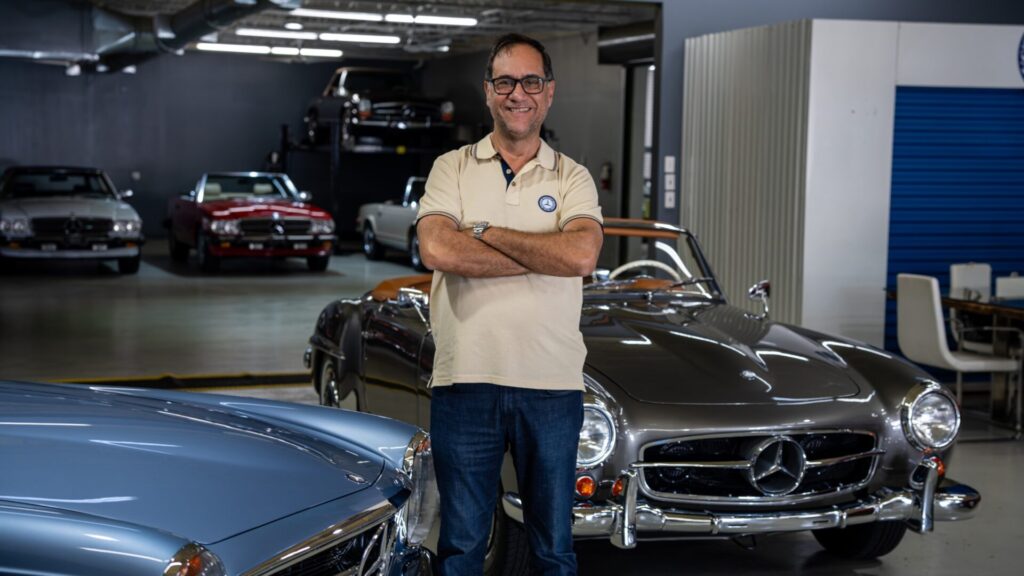
And, for the purists among us, Unique Cars of Palm Beach has no trouble at all restoring a car to absolute factory specs, even to the point of preserving various items as allowed.
“Sometimes the best practice is to preserve a car, but sometimes restoring it is the way to go,” she said. “It’s really up to what the customer wants and what the car will allow. Some cars are in a well enough condition that preserving them is the best course of action. Other cars need a full or partial restoration, so the car has a lot to do with how we approach it. But, when we work with a client, we take the time to figure out exactly what they want, how they want to use the car, and suggest which path might be best for them. These are very good cars and can be used often, but modern traffic dictates certain cautions. However the customer wants to use the car, we can help them achieve that dream.”
Check out their website here – their showroom and garage are fabulous.