A look at an urban-set, 100-year-old former bowling alley
Lincoln Park, Michigan is a first-ring suburb of Detroit. Largely developed after WWII, block after block of tract homes on 60-foot lots were built to house the growing industrial workforce and their baby boomer young families. Lincoln Park is one of the most densely built communities in the United States. As such, there’s no room to add a pole barn in a back yard.
As such, space for an expansive Dream Garage is unheard of.
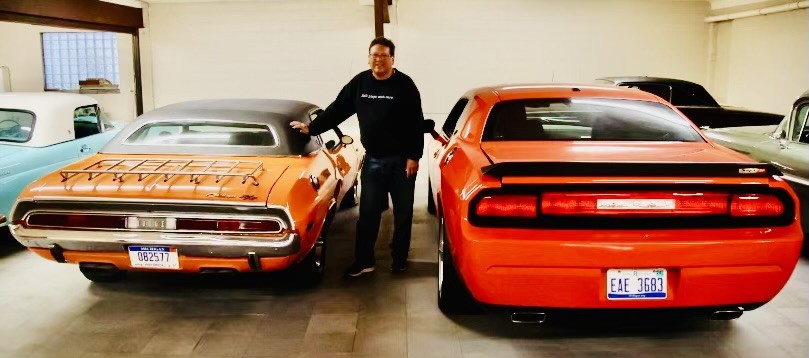
Steve Legel is a full time practicing general dentist in this Detroit downriver community, and a retired faculty member at the University of Detroit Mercy School of Dentistry. I’ve been investing in distressed properties in my hometown of Lincoln Park since the economic maelstrom of 2009 and 2010. I’ve rehabbed homes in my local community and provided excellent, below-market cost housing for students who come from across America and around the world to study at UDM Dental.
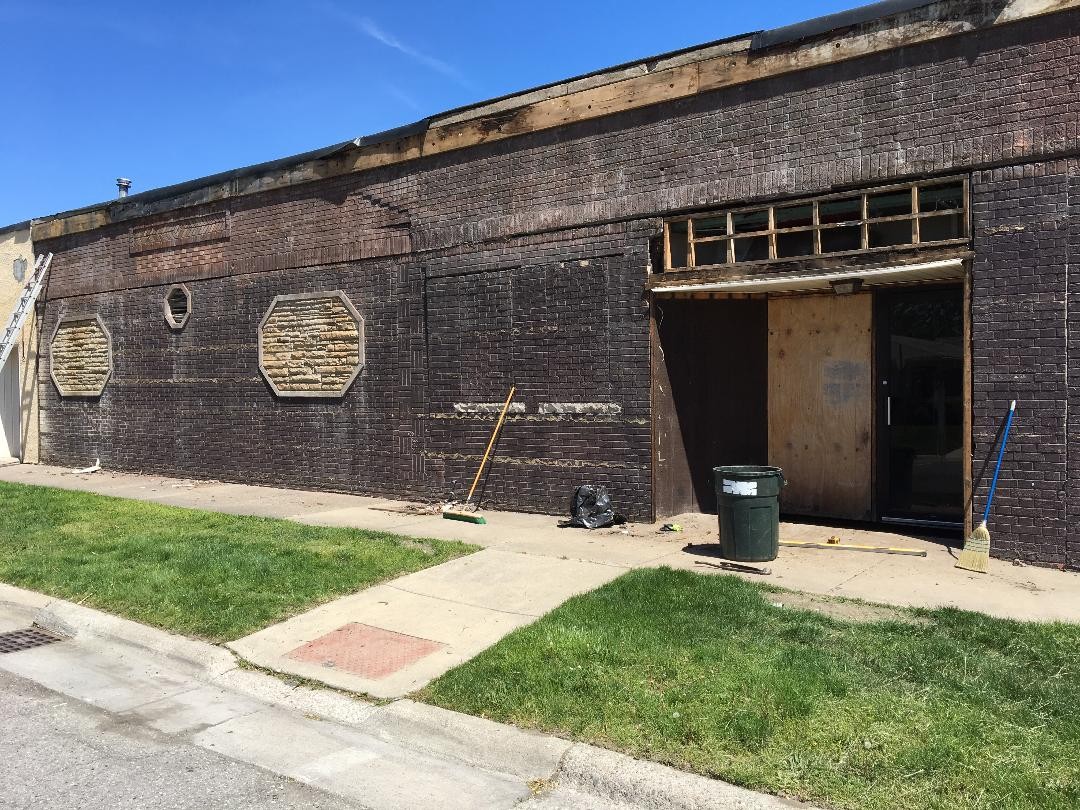
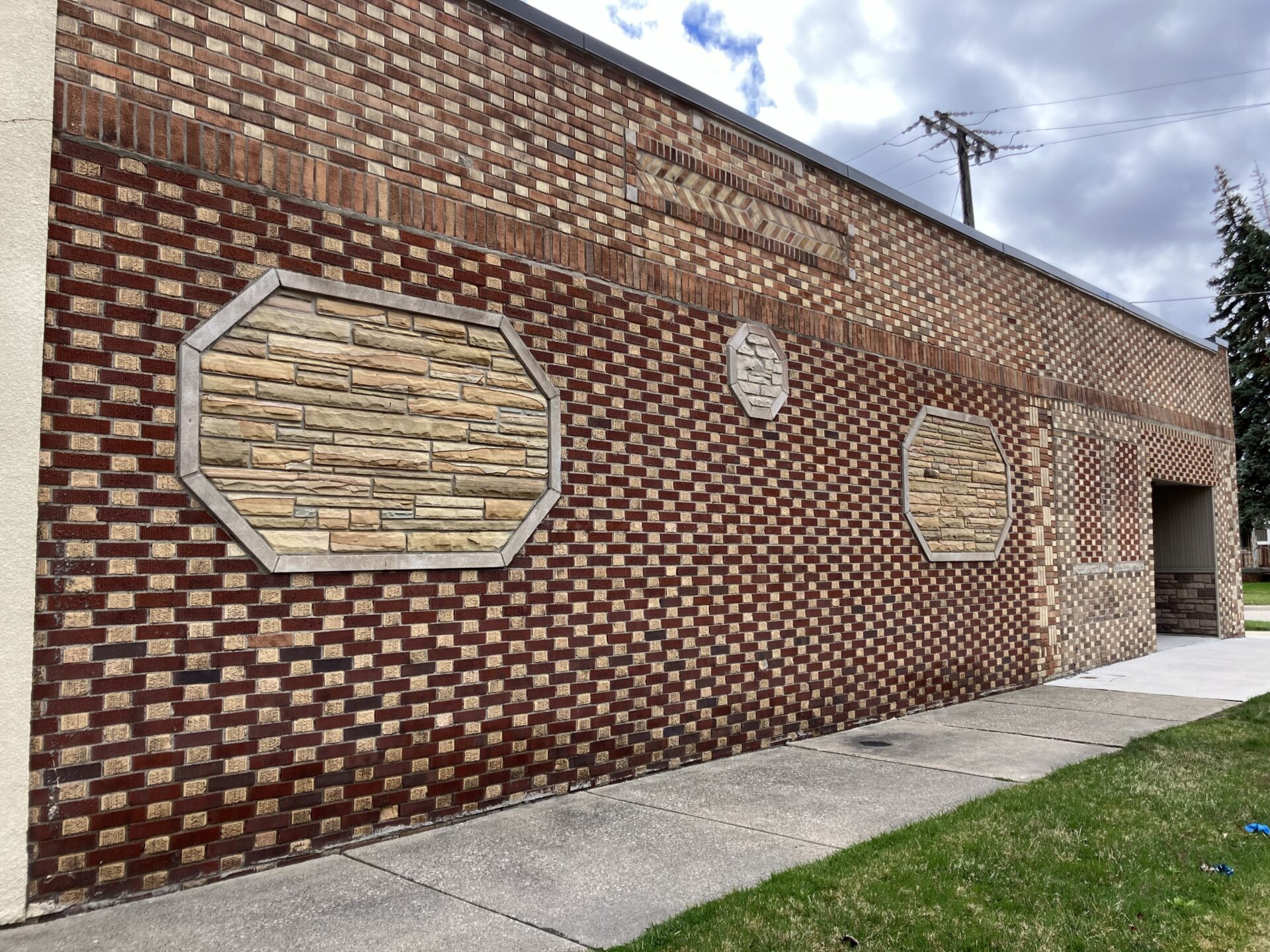
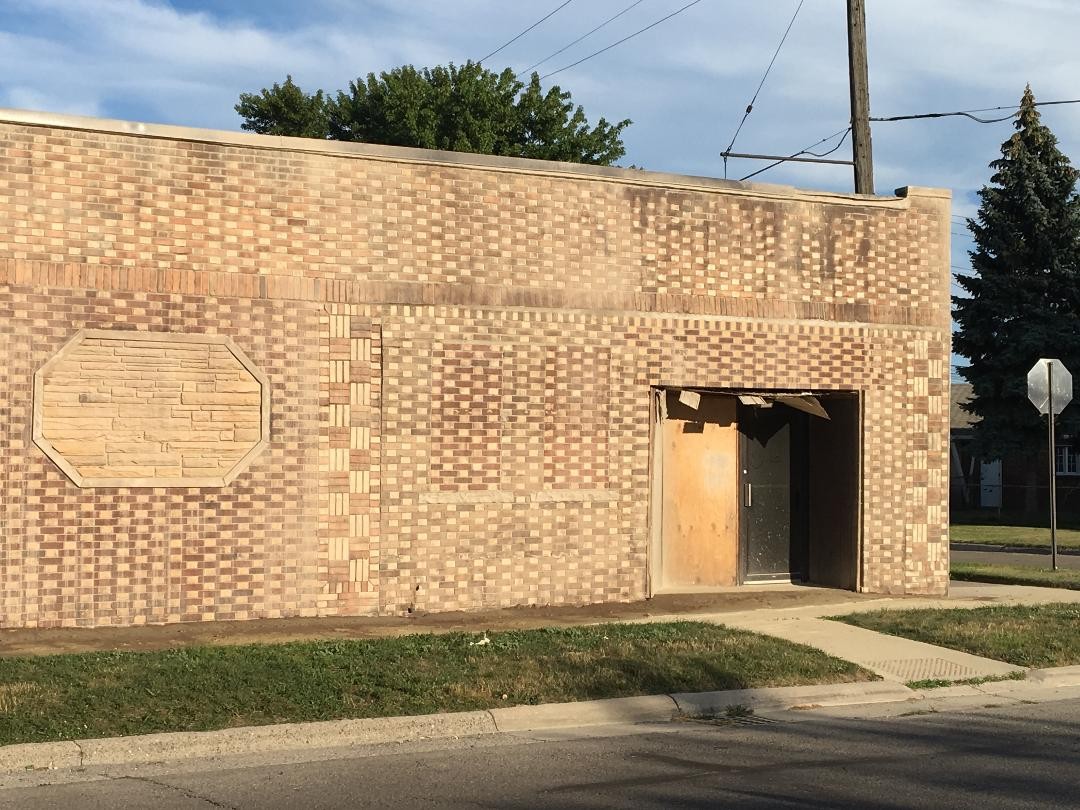
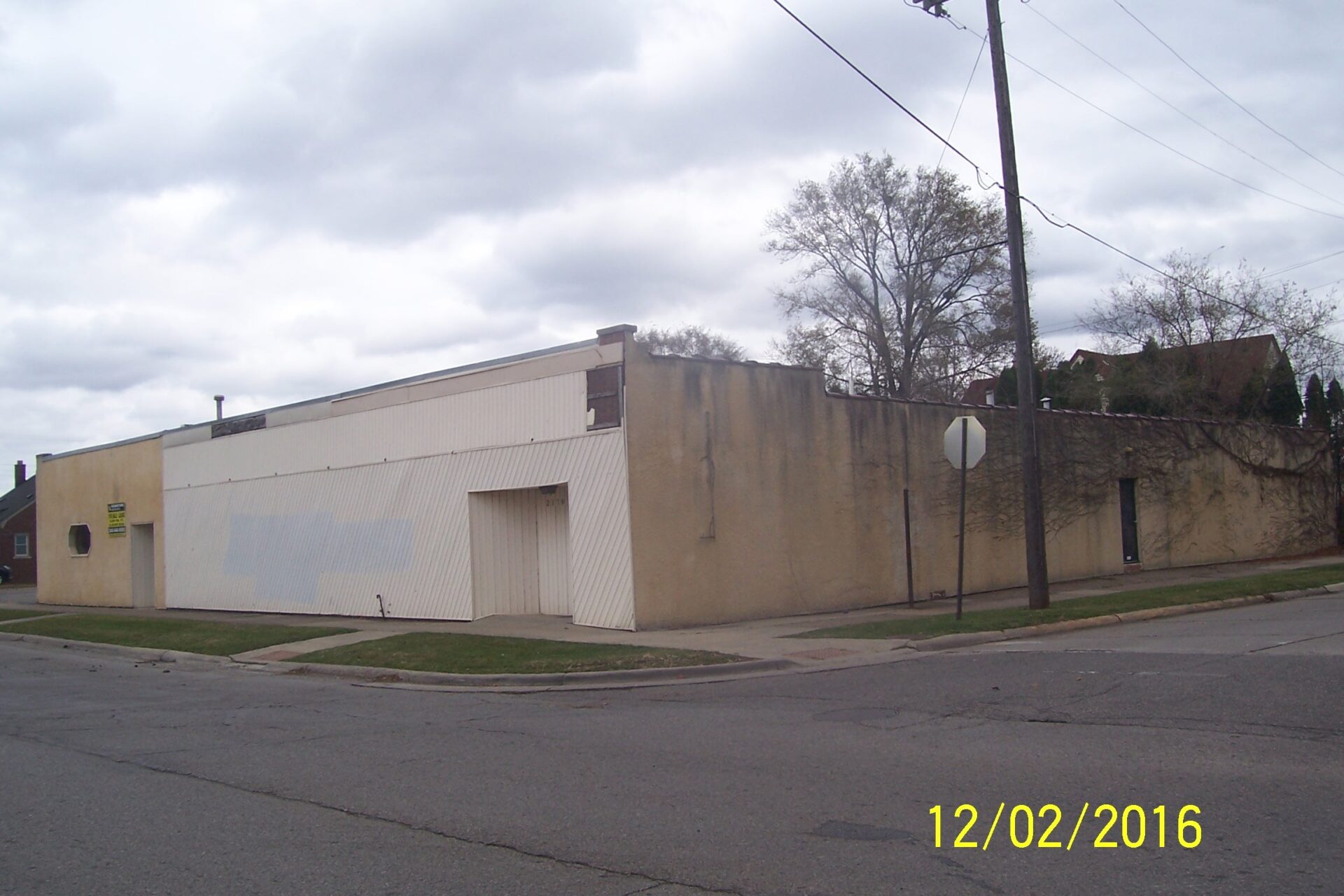
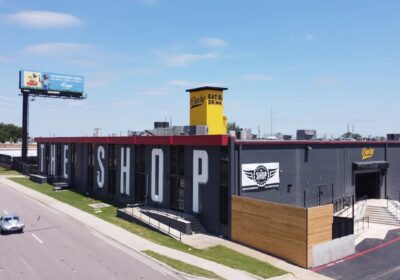
Consistent with that mission, about five years ago he purchased the former “Shorty’s Bar and Bowling,” later known as the “Side Street Lounge.” In its day, it was a young adult dance club and home to fledgling (now famous) rock bands. Left vacant in the 1980s, the building sat unused and unmaintained for over 30 years. Neglected is an understatement. There were holes in the roof…one of which was big enough you could drop a car through it. The property occupies almost a city block, and the building itself covers 9,000-square-feet. It is unusual that the zoning is residential, and in fact it sits in the middle of a residential neighborhood. In the 1920s, the street “Fort Park,” was to be the business center for Lincoln Park. Only three businesses located there before the State of Michigan built nearby Fort Street, and the business community moved there. When the city was incorporated in 1948, Fort Park Boulevard was zoned residential, except for the three businesses that located there. As regulations go, the bar enjoyed a long run, but when ownership or use changed, the property reverted back to the residential zoning, and that contributed to its languished deterioration.
In the first year of rehabilitation, the roof was replaced with rubber membrane. There were several areas where roof deterioration was so bad that the sky was visible and even a tree was growing out of the roof drain. The building had been clad in vinyl siding, which had become broken and graffitied. That was stripped off, the painted brick sandblasted to reveal an extraordinarily unique and delicate basketweave brickwork. In its history, additional doorways had been added and the construction there was of poor planning and execution. Crumbling brickwork was removed, a new support structure built, and the brick work restored. Areas of stucco were restored and some outside walls were repainted. Mind you, one wall of the building took 15 gallons of paint.
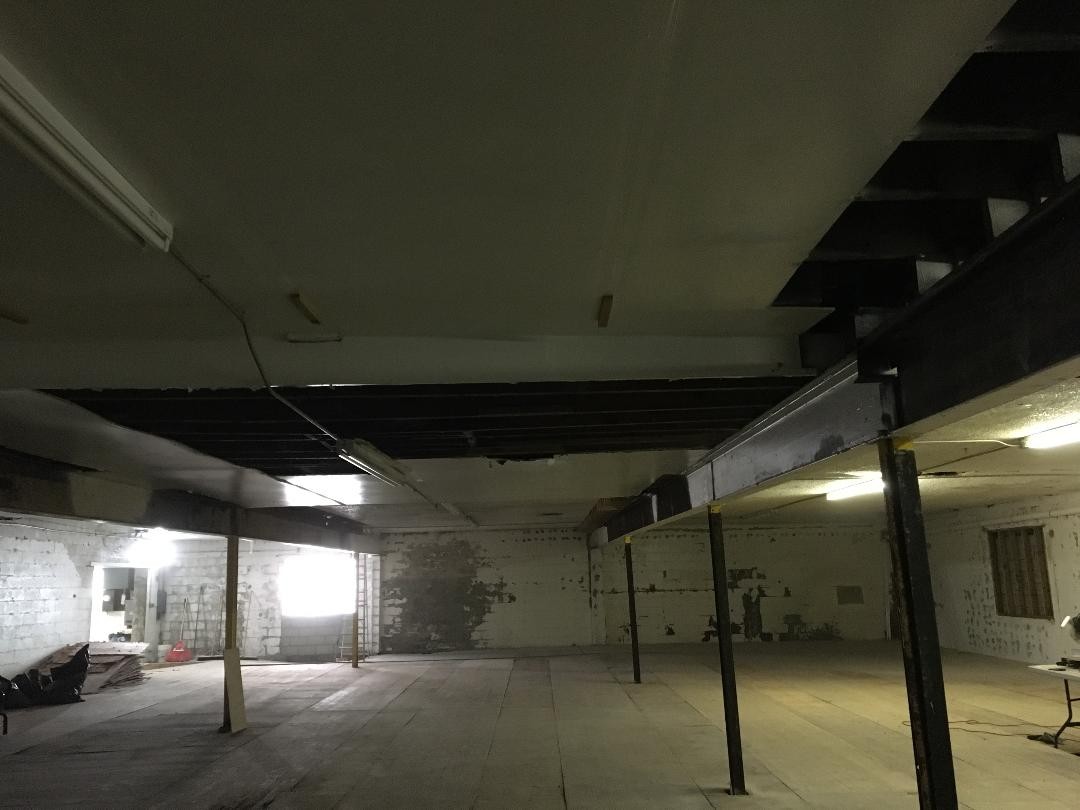
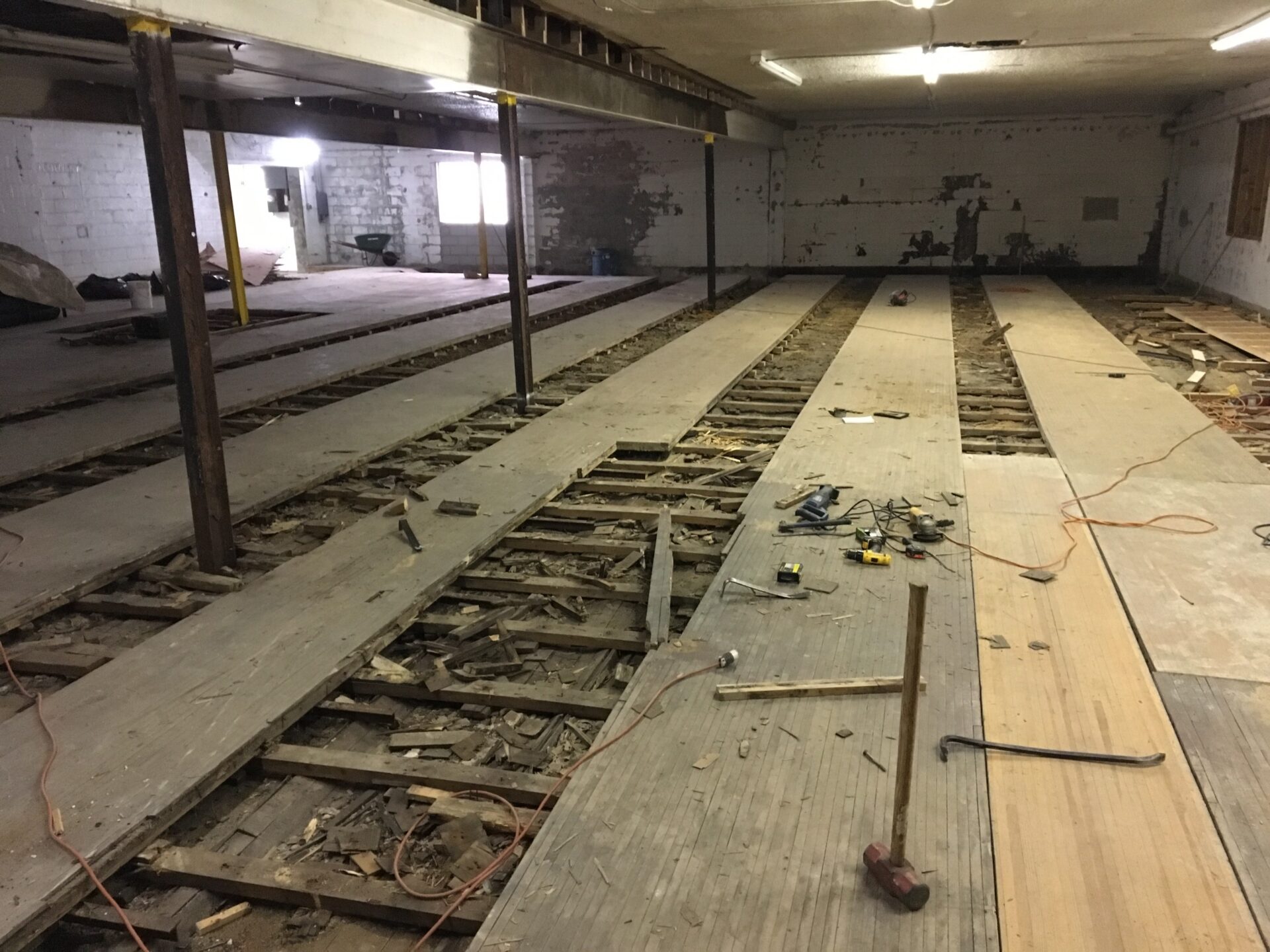
Inside the building, over the ensuing year and a half, required a similar dedication of time, labor and money. Flooring, walls and ceiling have occupied the interior labors. Imagine how a bowling alley is set up with lanes and gutters and ball returns. The bowling equipment was long gone, and I imagine that when it first opened, pin boys used to work the far end of the lanes. The far end of the lanes is called the “pit.” Appropriately, it is a 7-foot-wide, 18-inch-deep pit running the 65-foot-length of the back wall. The areas of ball returns and gutters had been filled with plywood, and the floors carpeted for the dance club. There was a large stage, and three different bar areas.
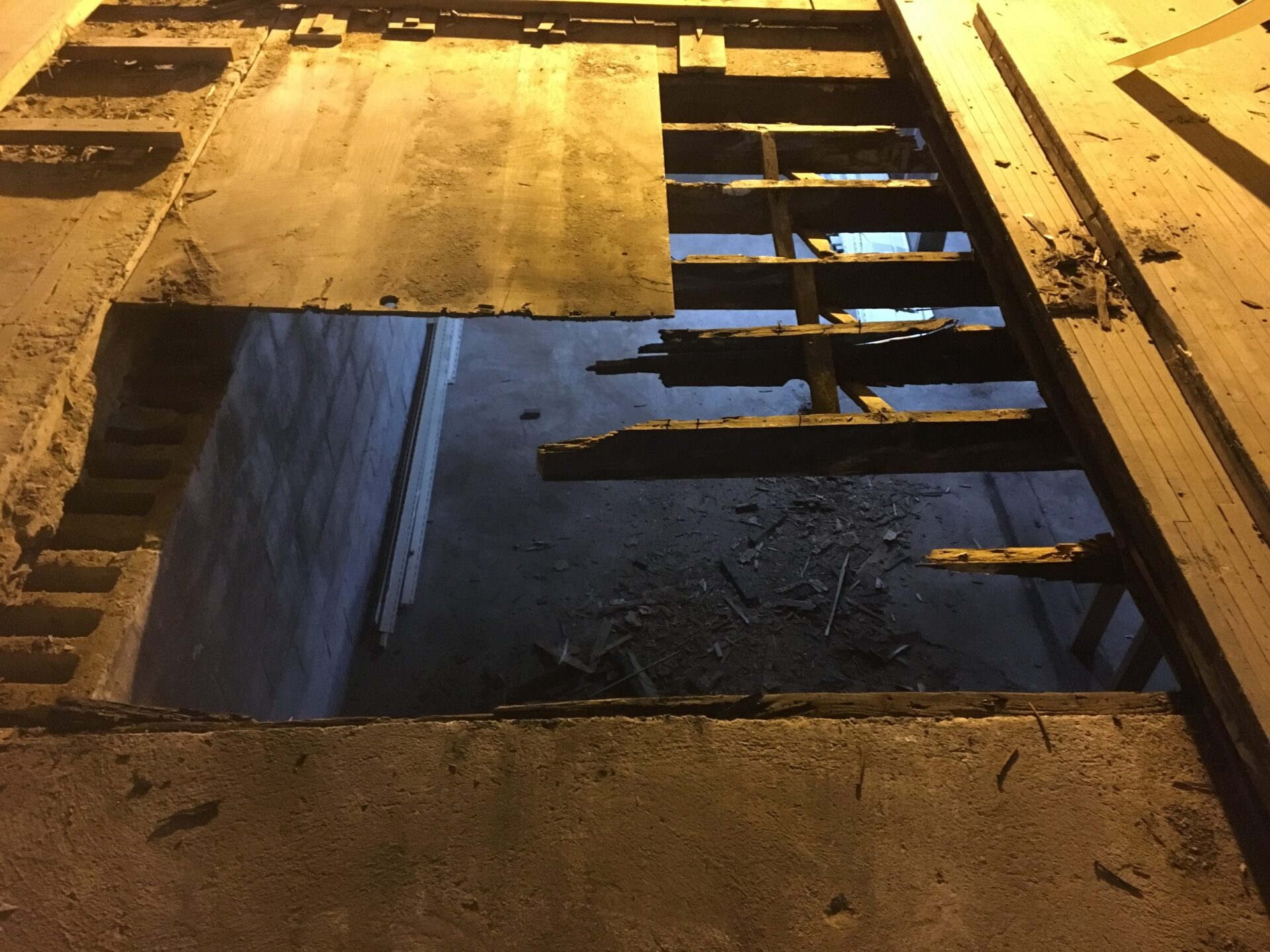
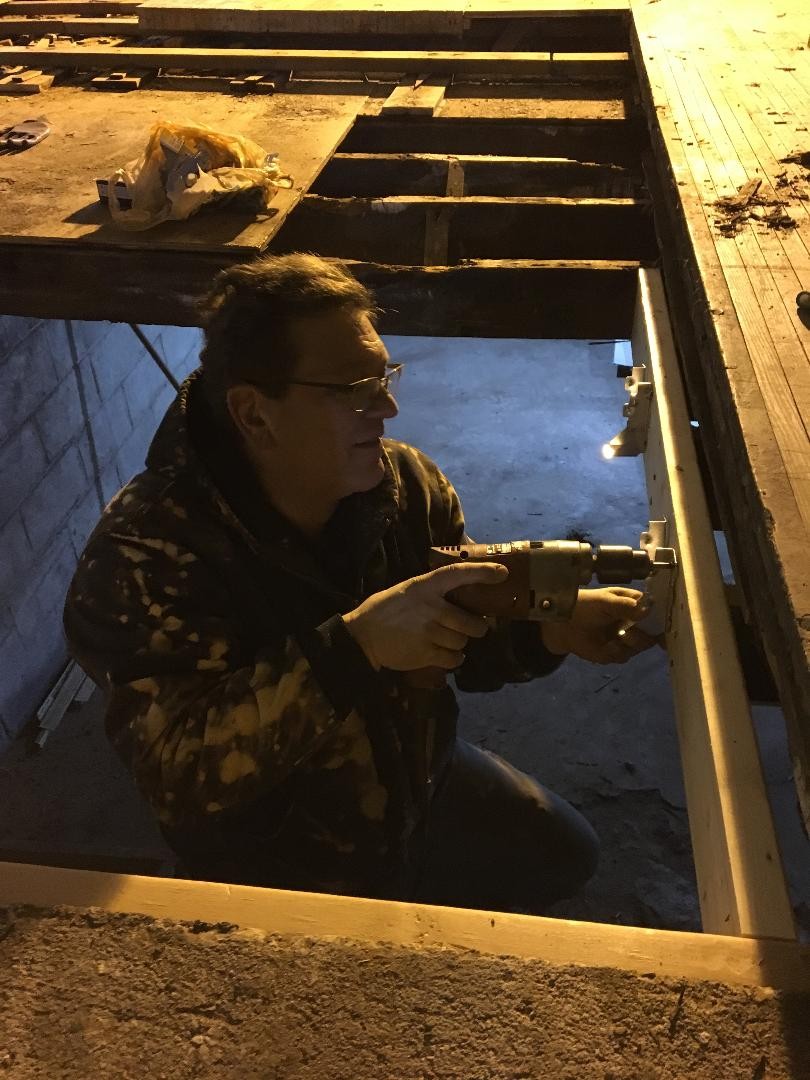
Under the guidance of the building department, it was decided not to risk parking classic cars on the wood floors, and plans were made on revamping the 6,000-square-foot bowling space. My crew and I executed a plan to open 3,000-square-feet to the bare cement and repurpose the bowling lane wood to fill the areas in between the original (1924) bowling lanes. We removed the plywood fillers and their underlying fabricated supports. Then we measured and cut pieces of the far ends of the bowling lanes to fit and fabricated new supports and fit pieces together like a jigsaw puzzle. The maple lanes are 2 ½-inches thick, 42-inches wide and we tried to keep lengths in workable 8- to 10-foot sections. It takes six-to-eight guys to lift a piece of maple. The 1-inch-wide maple strips are randomly nailed together and then supported underneath by strips of angle iron screwed in from below. Nothing comes easy in the big building. Under the lane, the supports look like a Jenga game of interwoven wood pieces, which in turn is nailed to underlying 2 x 4 (real 2-inches by 4-inches) and in turn nailed into boards recessed in the cement floor. The cement floor is over 12-inches thick. The main supports recessed into the cement were not just a 2 x 4 embedded in the wet cement. They are wider at the bottom so they can’t shift and pop out from the cement. Which, they did not. About half the wood had rotted from various roof leaks and the passage of time. Removing the oak insets required splitting them with a circular saw, then using a power chisel to hammer them apart and remove them. In all, 47 strips at 22-feet long. The resulting slots were back filled with cement. That large area of cement, although 12-inches thick, was never meant to be exposed; as such, it was never “tooled” to a smoothed surface. Leveling and smoothing the surface required “Scarifying.”
You have seen big road-sized scarifiers grinding the surface of a road prior to new asphalt being laid. I was unable to find a Detroit area company to grind and level the cement floor, but eventually found a used scarifier at a pawn shop in Cleveland, drove there to get it and used it myself. That is a big, dirty project, grinding nearly 2,000-foot of cement flooring. The “pit” was back filled with cement rubble from my other projects and then capped with 5-inches of smooth cement.
Two of the cement block walls had many layers of paint build up and multiple areas where paint had peeled and just been painted over. I had two interior walls sandblasted to prepare them for a smooth finish paint job.
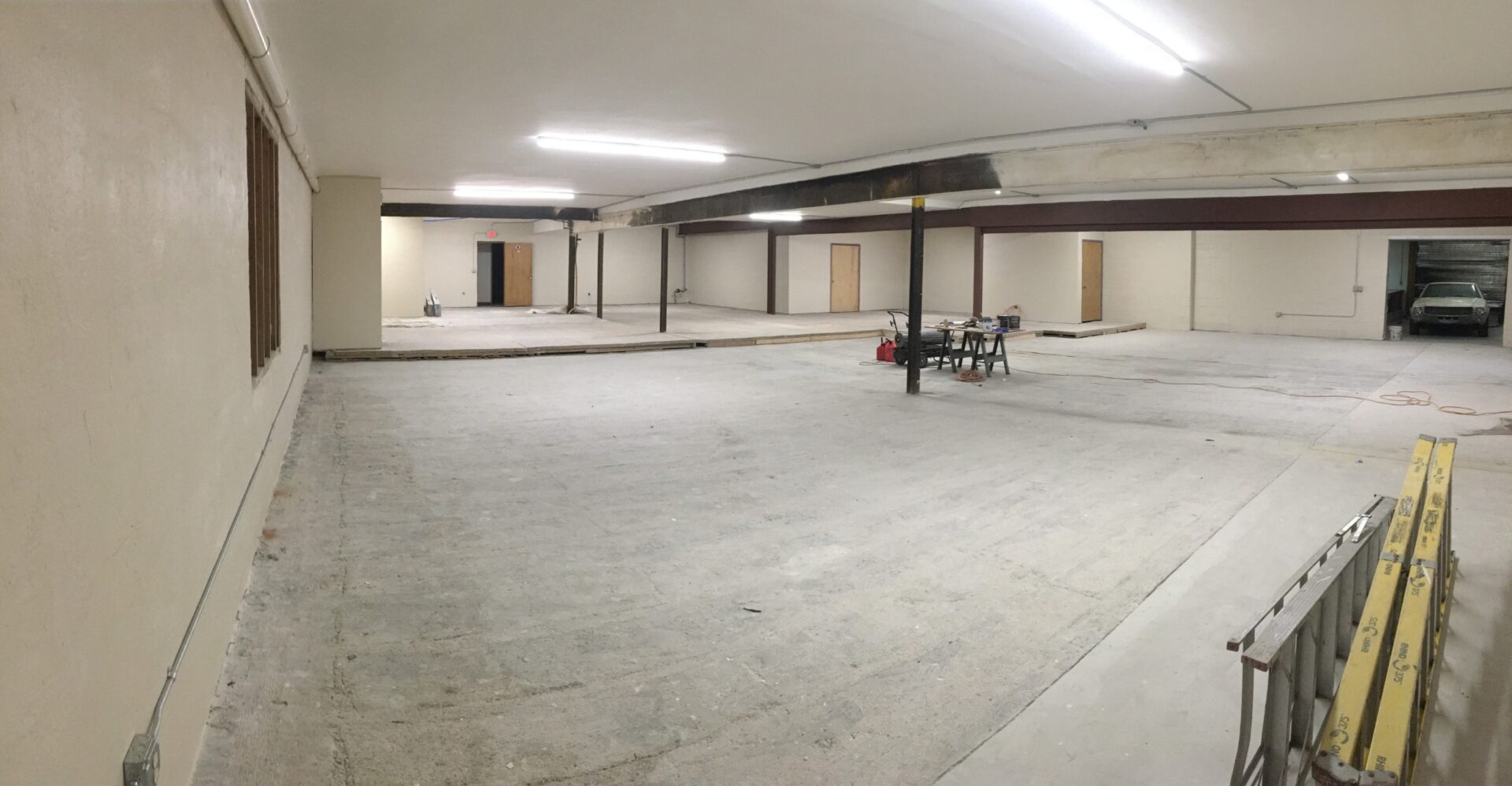
The long, open space, front to back, is supported by 16-inch steel beams held by steel posts. At some point, a garage door was added. The door was located 10-feet from one of the support poles, right in the middle of the path from the door. It was no big deal for walking or, I suppose, delivering kegs of beer; but the post was smack dab in the way for a car to pass into the main area for parking.
A structural engineer calculated the roof load, snow load, and reinforcing requirements needed to remove the offending post. Twenty-four-feet of ¼-inch steel and a 4-inch I-beam were welded to the existing beam, and the post was removed making clear space entry.
Restoring the ceiling after the roof had been rebuilt was an additional dilemma. I had four contractors look at the job. One told me flat out, “No way, too big, too hard, too unpredictable.” One started the project and after two days told me the same thing and quit. A third took money for materials and never returned (I sued him and won my money back), so I took the project on myself.
Part of the problem was water damage to the joists from the roof leaks. In two large sections of the ceiling, the joists had become bowed from the slow, steady wetness. To begin the repair, I chalked a level line from one beam to the next to indicate the amount of “bow” and the amount of wood needing to be removed to level the area before new drywall could be installed. I found a special high-powered, small-access saw to cut the sagging areas way from the joists then “sistered” 17-foot long 2 x 4s to add additional strength. Twenty-four such joists, 17-feet long. My crew was then able to install new drywall and, piece-by-piece, secure any old surface, and prep it for final finish.
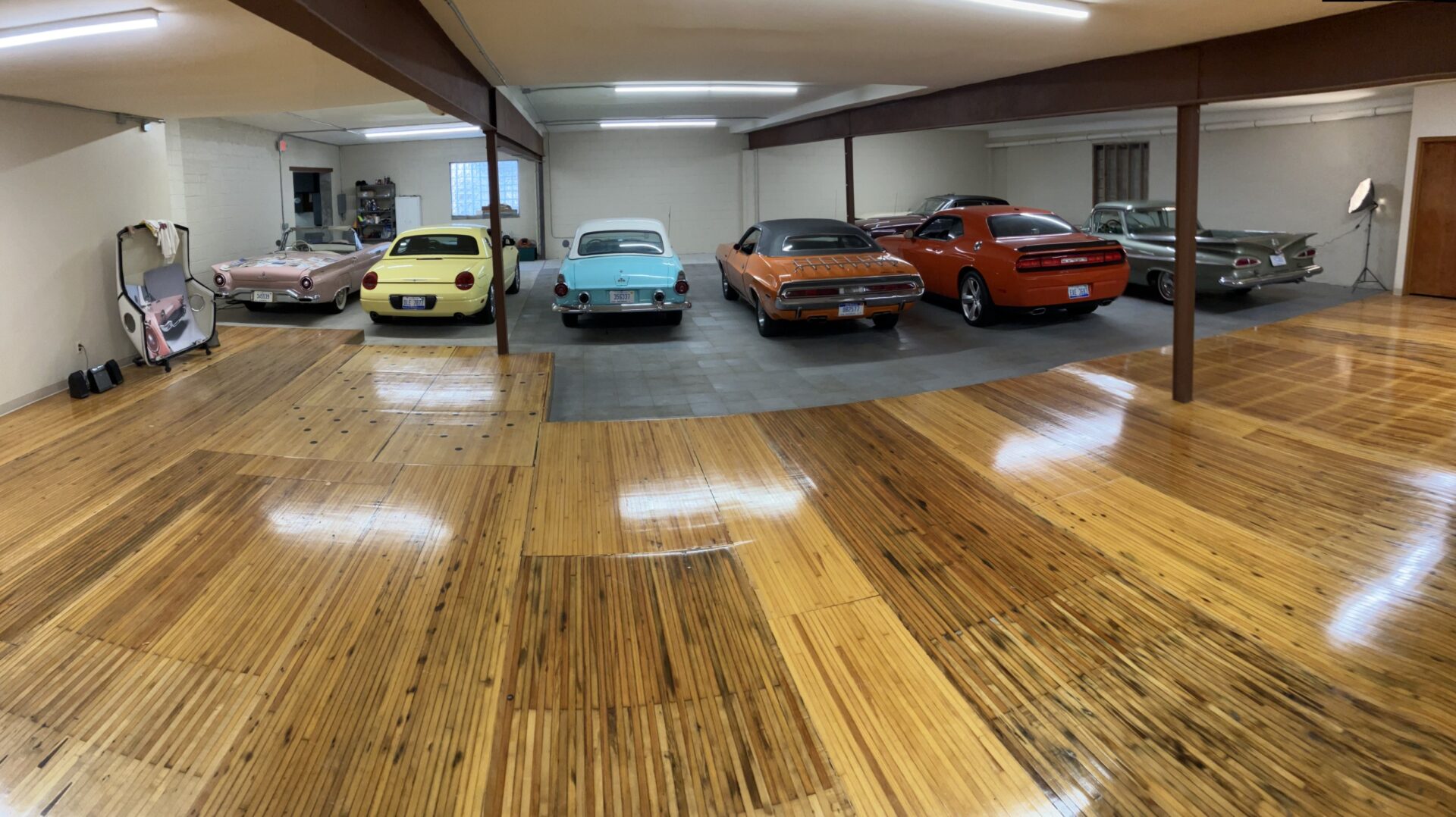
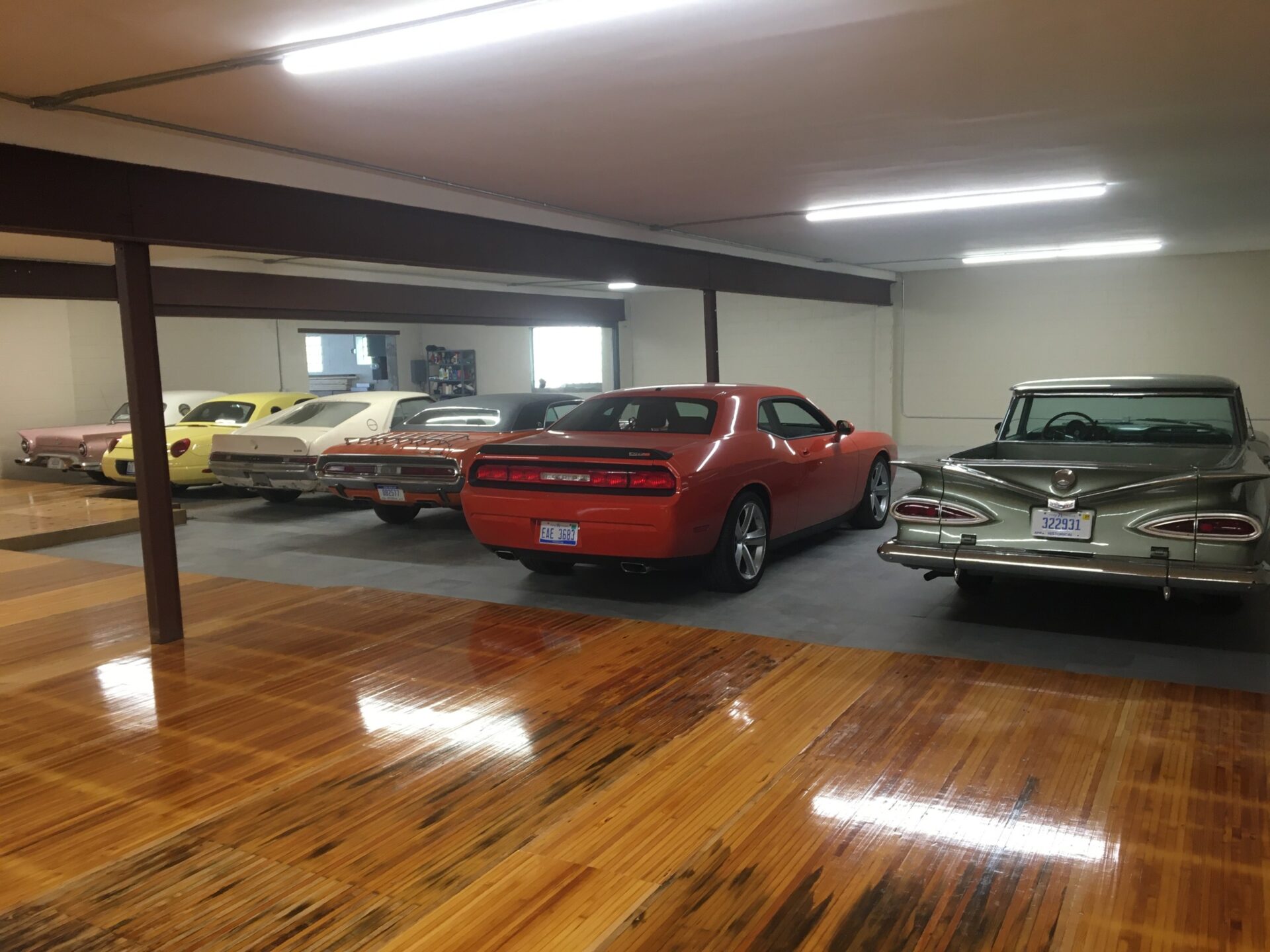
Photos show the high gloss finish over the bowling lanes. LED ceiling lights illuminate the gathering and showroom space. I had the conduits for the lighting run tight and behind the steel girders, giving the ceiling a clean open look.
The repurposed pin markers inlaid with ebony markers for the pins were salvaged from the far end of the lanes and used to rebuild areas of flooring that had been damaged from water coming in the open holes in the roof (see the photo of how 30-years of snow and rain intrusion rotted the roof joists, the 2 ½-inch thick maple bowling lanes, and the joists supporting the floor over one of three distinct basements under the building).
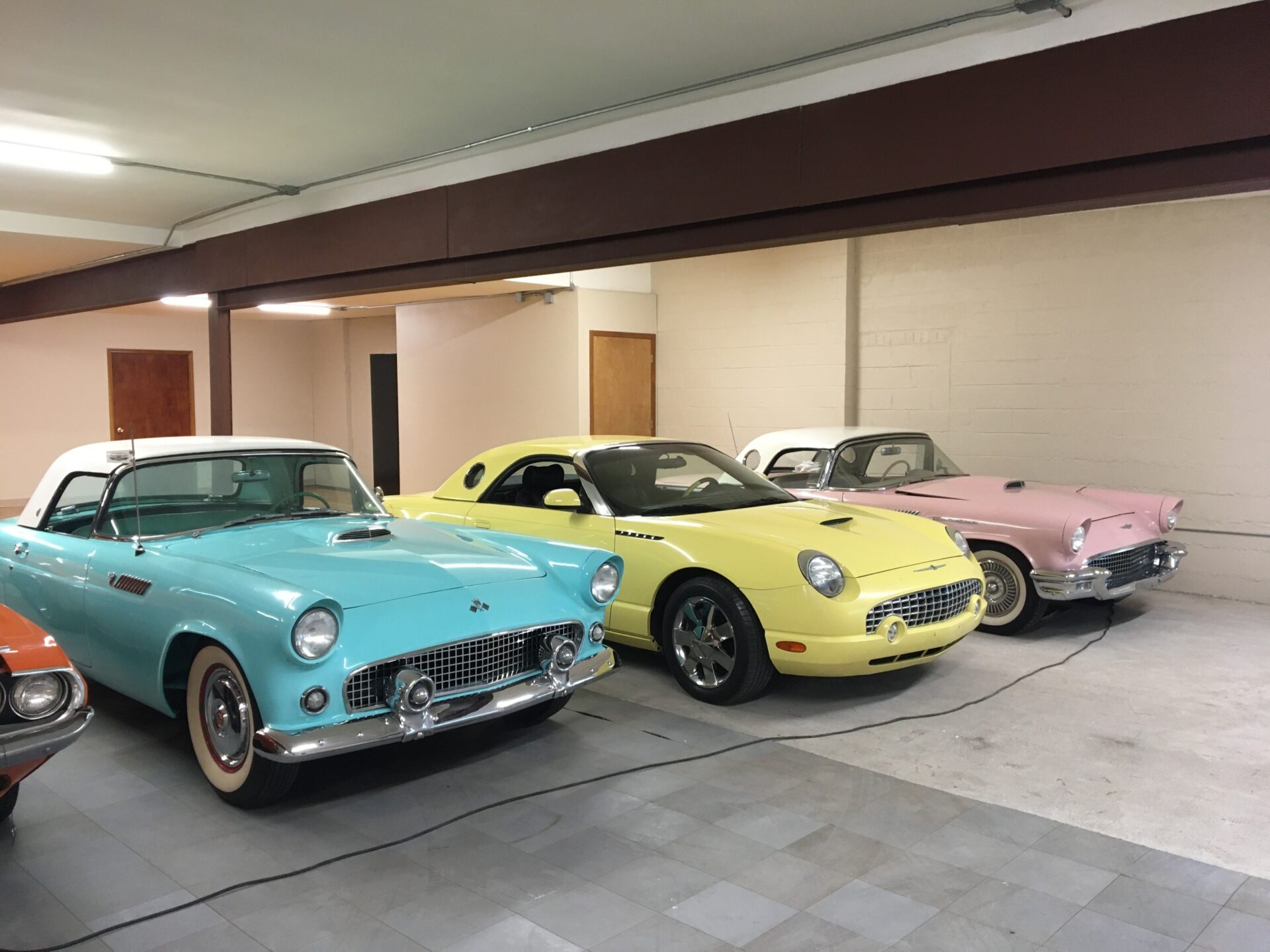
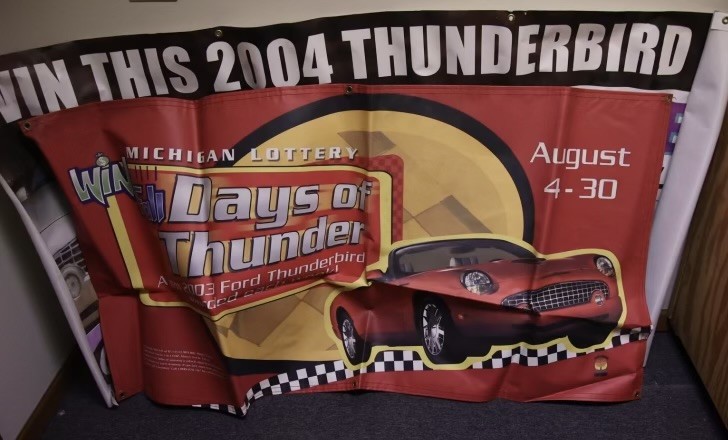
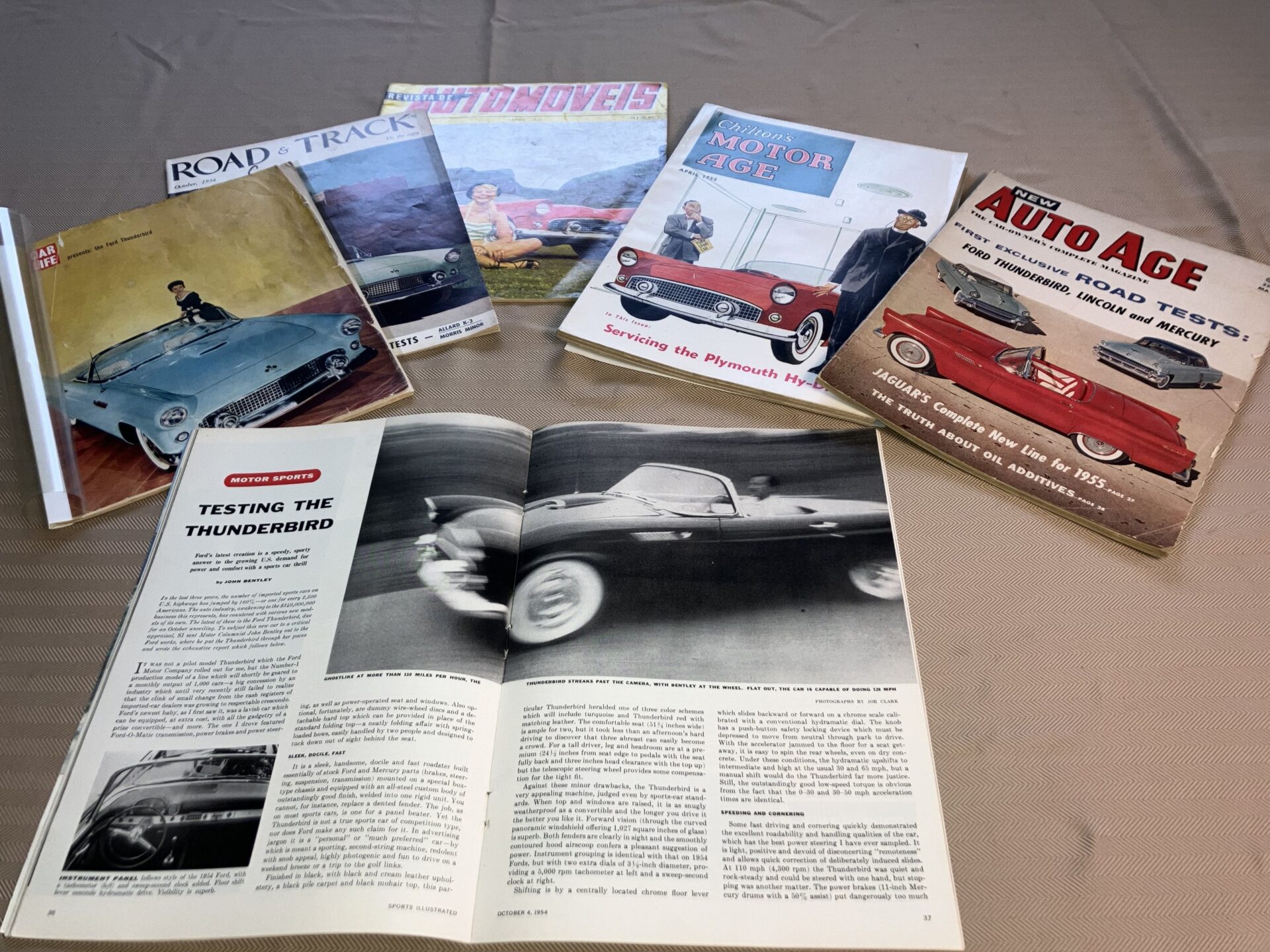
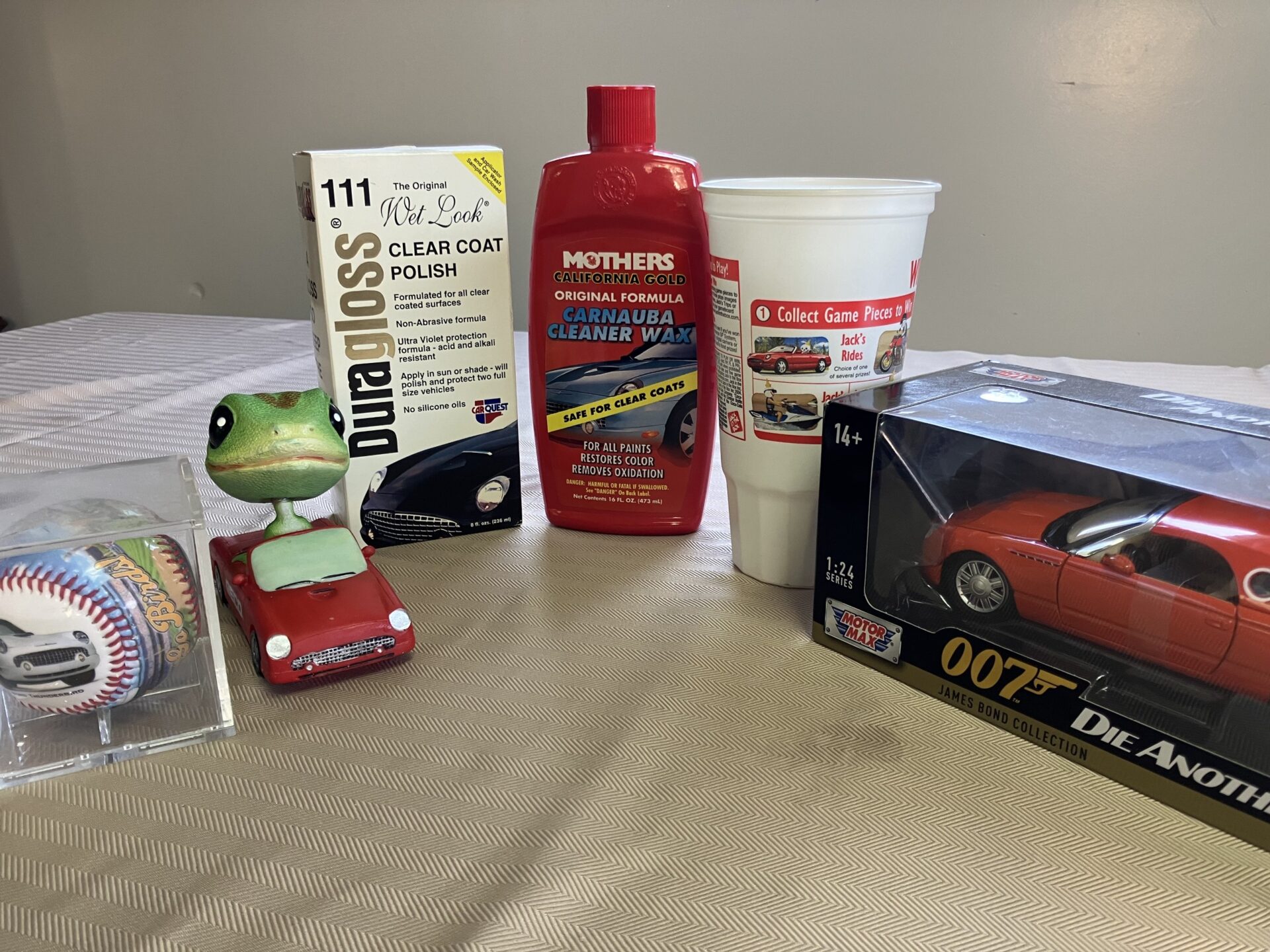
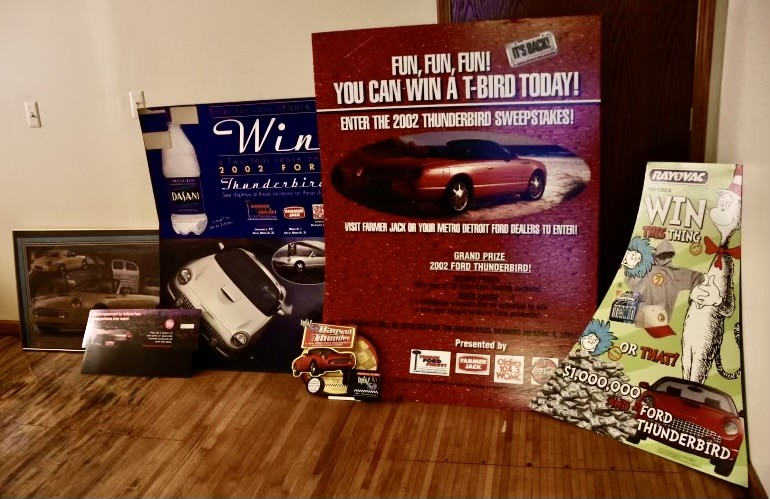
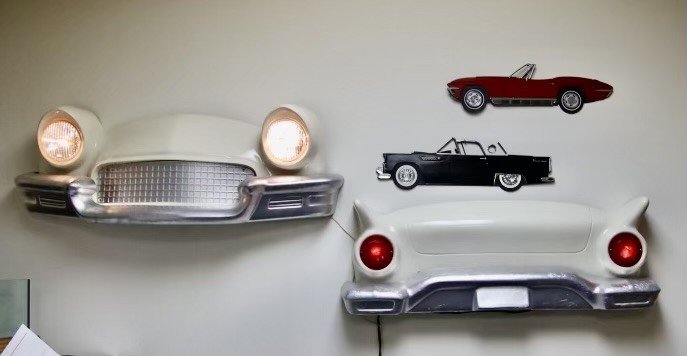
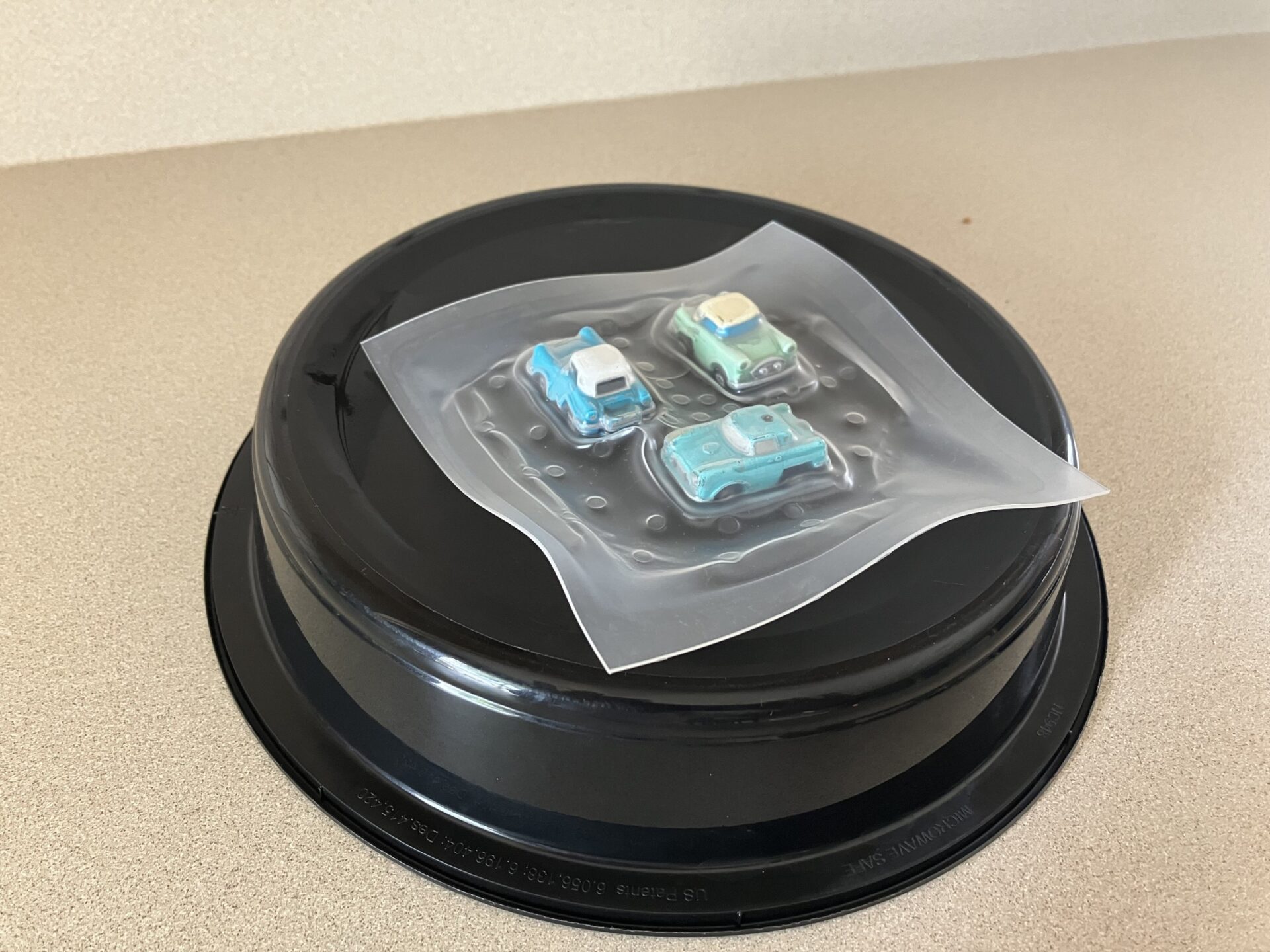
The 6,000-sq-ft open space is divided in half – one side is cement to house my car collection; the other half are refinished maple bowling lanes for a social gathering place. The remaining 3,000-sq-ft have been converted into eight office spaces and four handicap accessible bathrooms. Vandalized and damaged for decades, they have in turn been transformed into themed spaces showcasing an extensive collection of “Baby Bird” (1955,1956 1957) Thunderbird memorabilia. Each room has a theme, and my favorites are the 1950s toys and the ‘iconology’ room.
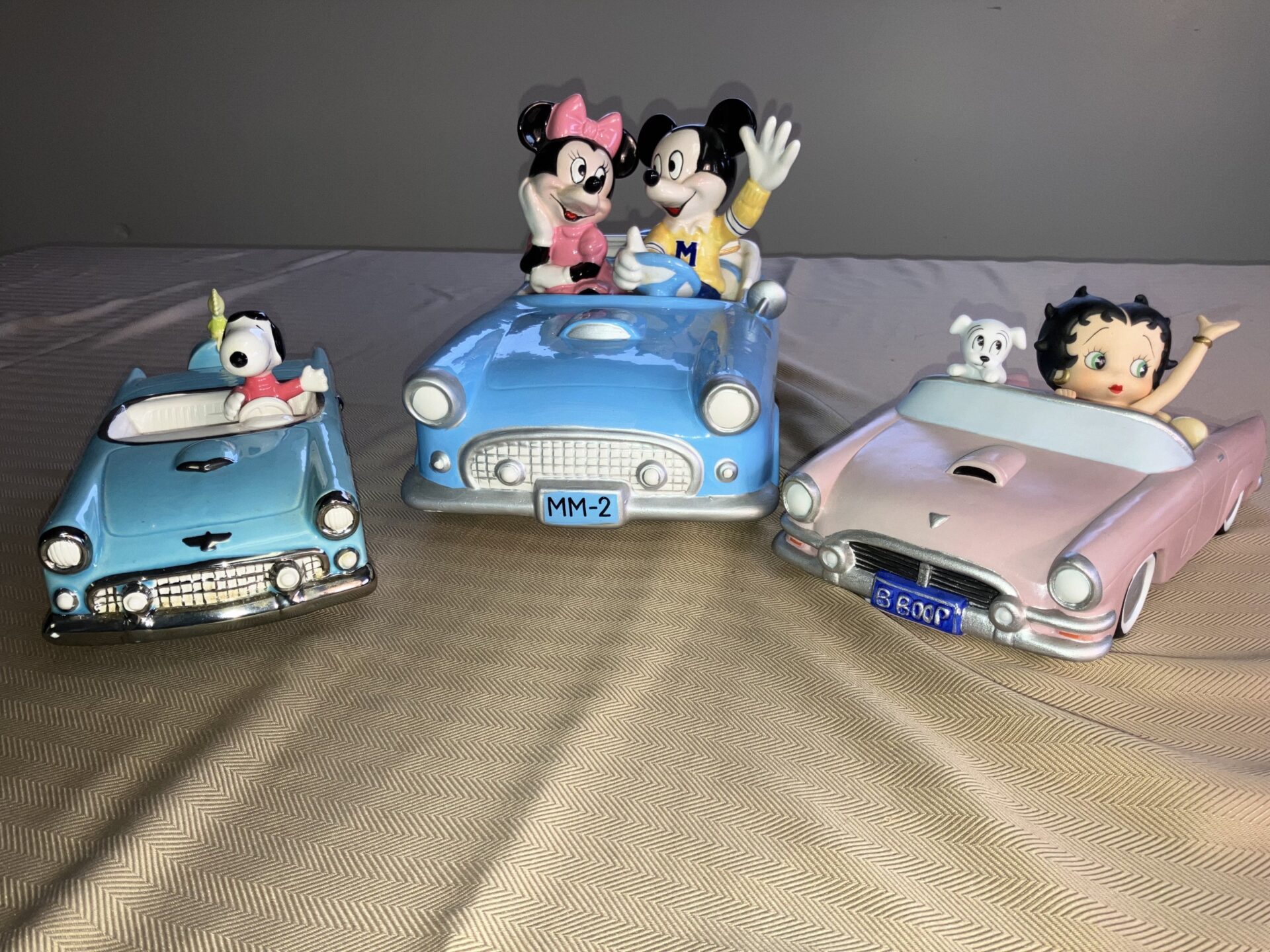
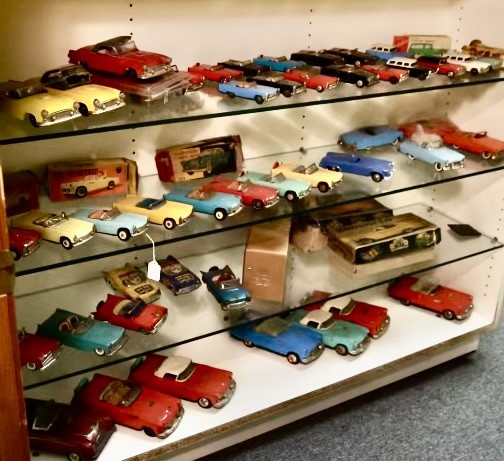
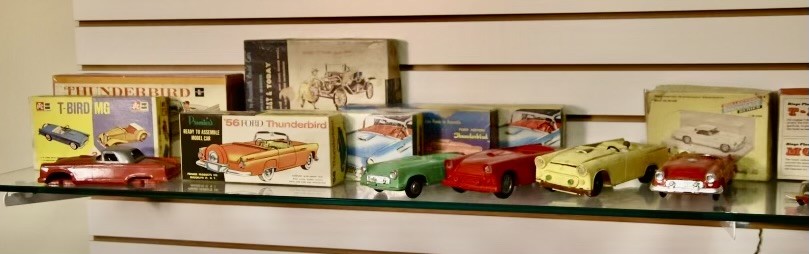
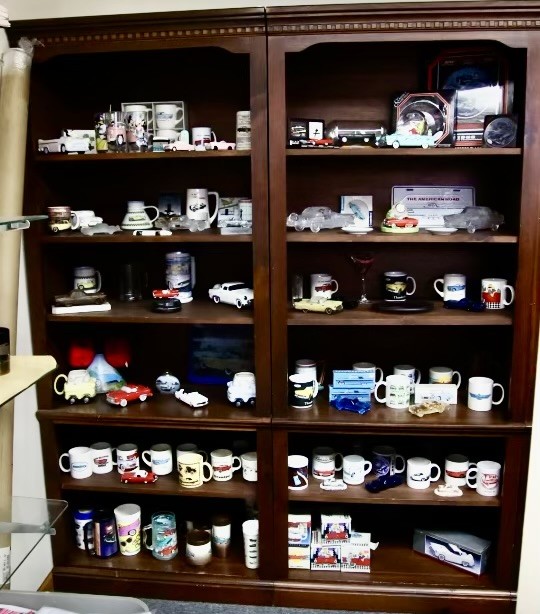
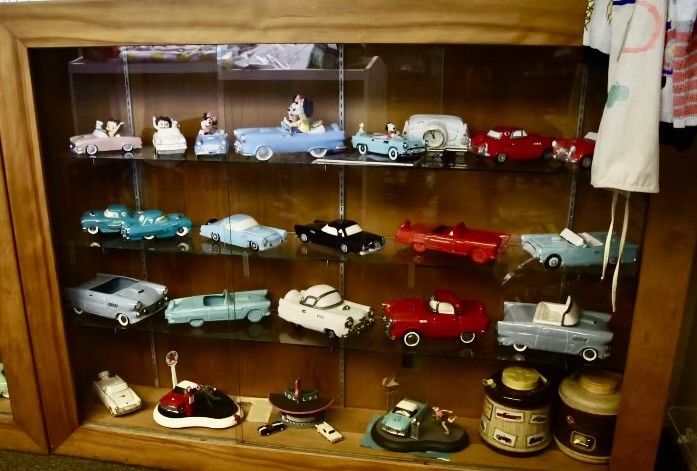
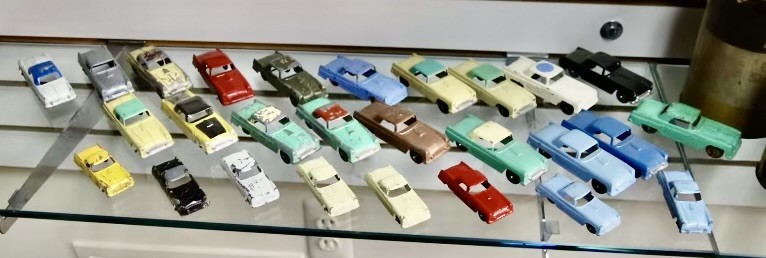
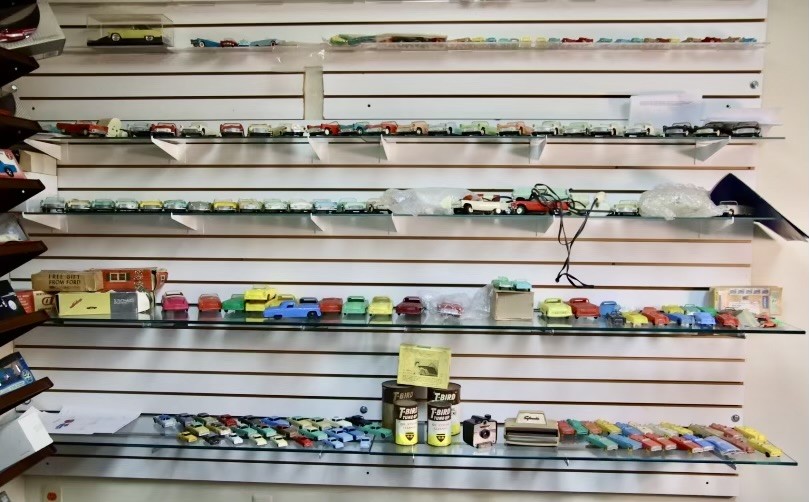
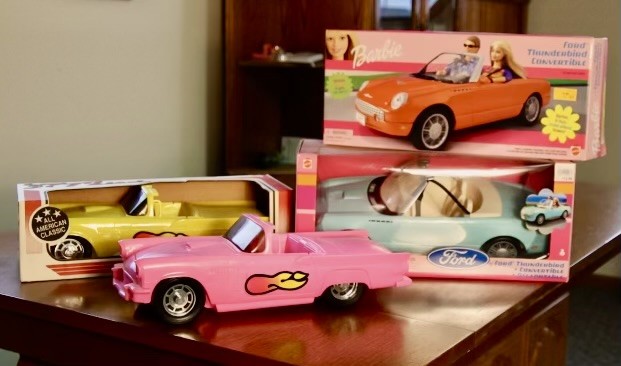
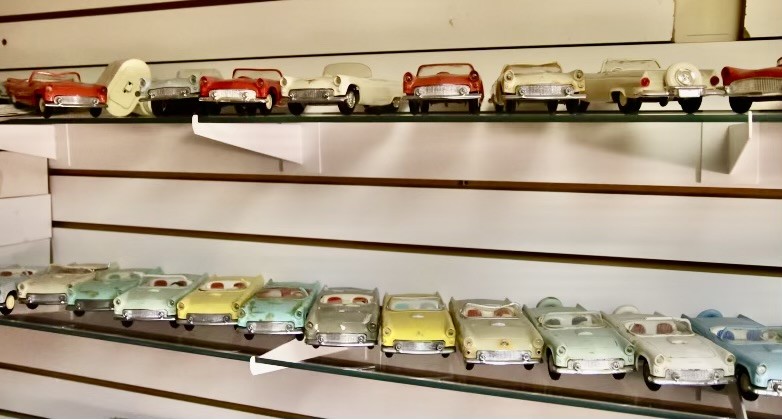
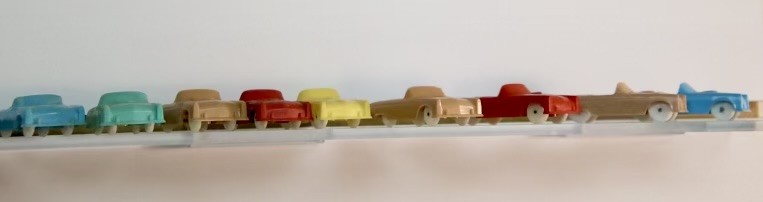
Among the 1950s toys are Tootsie Toy Thunderbirds in zinc die cast, F & F Post cereal promotional Thunderbirds, and Ford dealer promotional model Thunderbirds in a rainbow array of colors. The iconology room invites visitors to linger and see the amazing array of items that include Thunderbird shape or image. Among them, a high school Spanish language text book that uses a Thunderbird to name the parts of a car. Men’s cologne packs, record album covers, glassware, women’s purses, jigsaw puzzles…it’s quite a lot to take in.
Other rooms showcase Thunderbird models from other countries from around the globe. Another is the “Retro Thunderbird” room and another, a library of literature and books dating back to 1954.


To date, I’ve hosted local Thunderbird clubs and dental student activities, the Ford Archives, and recently, guests from the Thunderbird Reunion in Dearborn, Michigan 2023. I am often asked why I took on such a project, which is answered in multiple parts. One is a commitment to the community, another part is a selfish desire to have a place for my car stuff, another part is my own recreation (I like fixing things), and still another part is that it did not look that involved at the start. But, once deep into the project, there was no turning back. In addition, there is the financial investment. The work being done is solid, durable, long-lasting infrastructure. Nothing is being done to make the building so specific that no one can come after me with a different use. I am building “future” access for heating systems, plumbing, and electrical. Maybe someday it will house a community theater, or small woodworking, or distribution, or warehousing. Whatever its future, it will be nice and strong and good for my community.
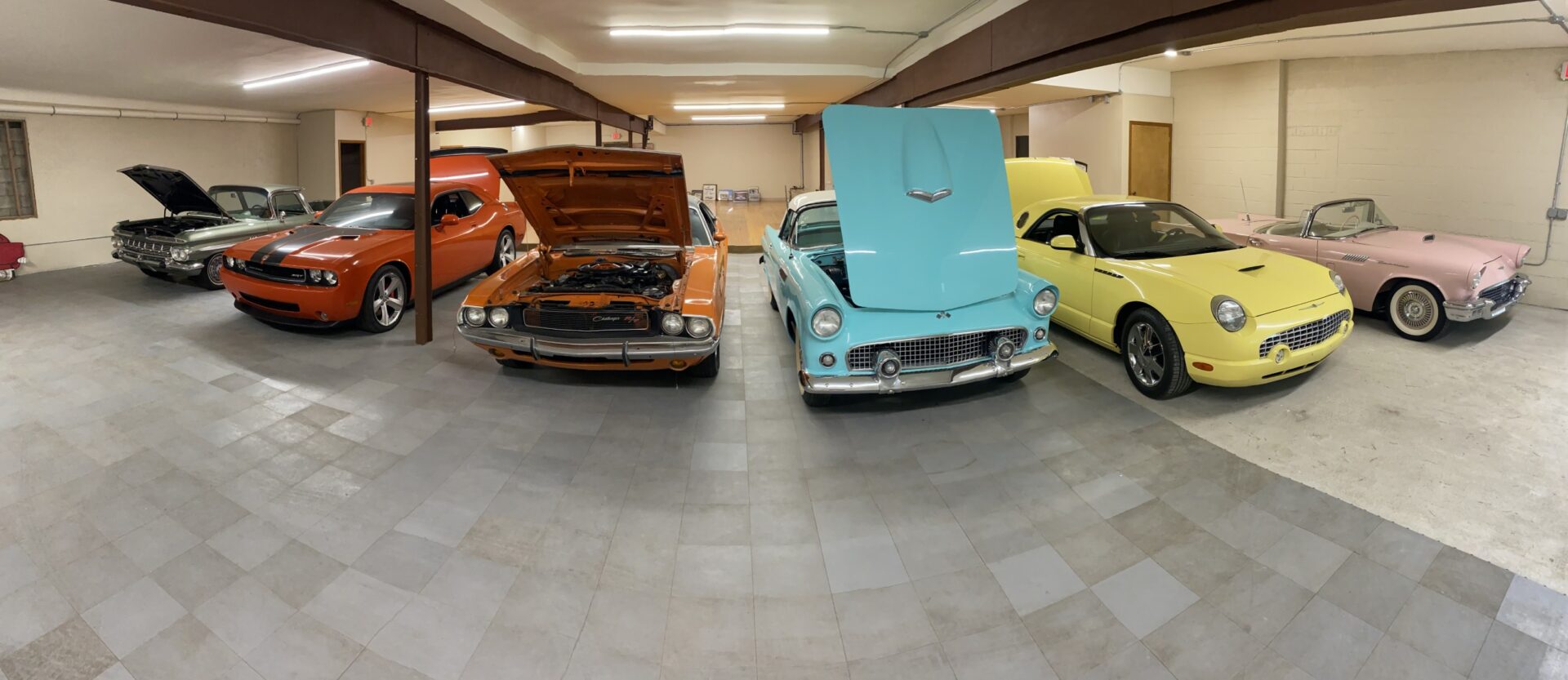
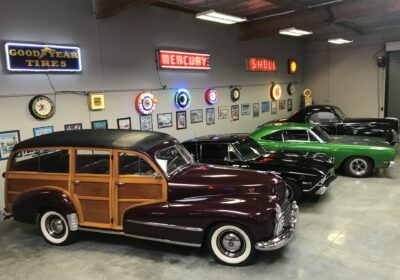
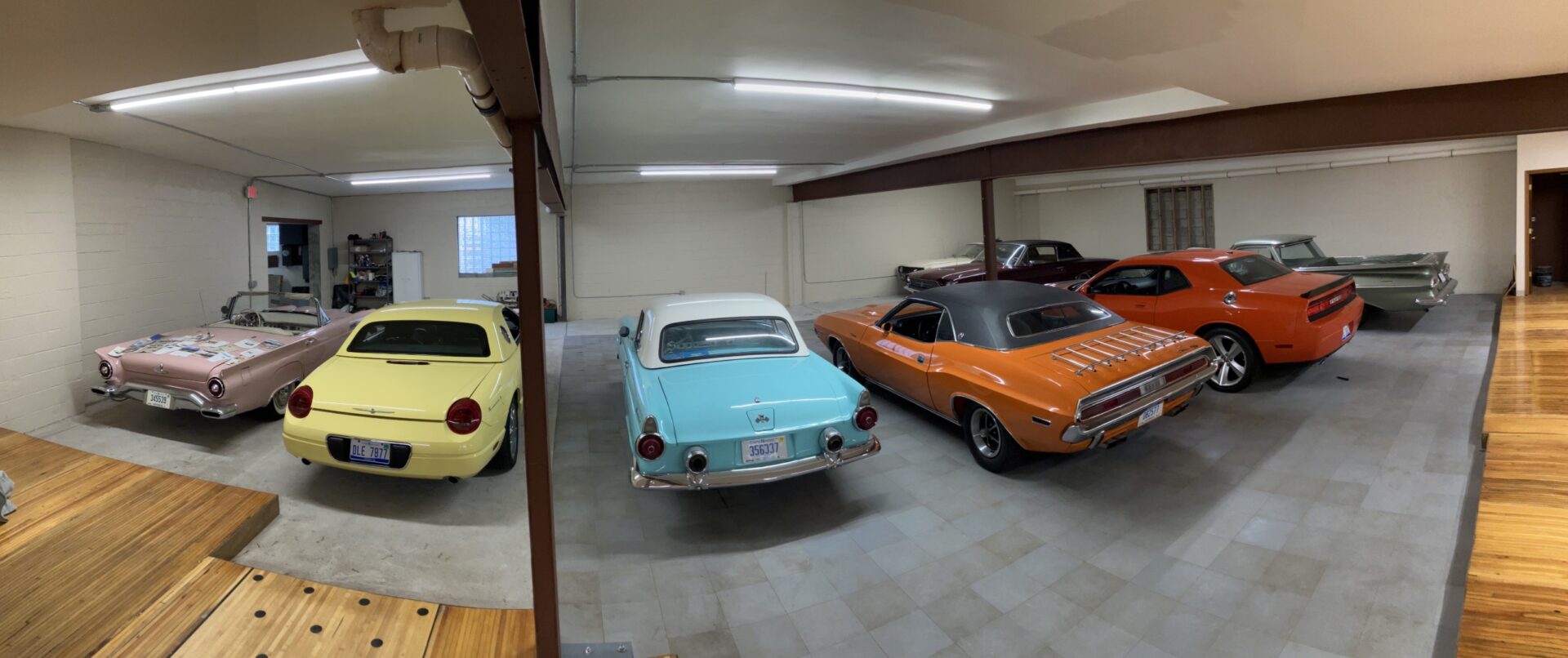
Among the car collection are a 1955 Thunderbird, 1957 Thunderbird, 1966 Thunderbird, 2002 Thunderbird, 1970 Challenger Magnum 440 RT/SE, 2008 SRT Challenger, a 1959 El Camino, and a 1969 AMX 390. Not featured are projects underway in a separate workspace, a 1981 Avanti II, 1960 Buick Invicta convertible, and 1968 Firebird 400 convertible.
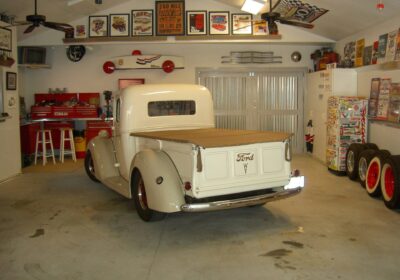
It’s hard to find workspace in tightly developed urban areas. In addition to this garage, I own a separate 1,400-square-foot building nearby. It was built as a car wash in 1946, and was zoned as automotive repair. Over time I have added a two-post asymmetric lift, an engine cherry picker, an engine stand, a plasma cutter, and a welding outfit. In that building I’ve worked on the ’55 and ’57 Thunderbirds, and the 1959 El Camino. My work included disassembly, some fabrication, wiring, detailing, and reassembly. The hard, gritty, dirty work gets done here, while the clean shiny finished projects go on display at the big building. The accompanying images show the 3-year transformation of the building and items I’ve collected.
[EDITORS NOTE] Text by Steven Legel; Images courtesy of the author